Baby Carrier

Inside an Ethical Baby Carrier Factory Workflow

Inside an Ethical Baby Carrier Factory Workflow

Manufacturing today is no longer measured only by production speed or output volume. Retailers and brands now pay closer attention to how products are made and how manufacturing environments are managed. This shift has increased the importance of working with an Ethical Baby Carrier Factory that follows responsible production systems and transparent workflows. Ethical manufacturing focuses on more than compliance alone. It includes structured production practices, organized workflows, safe working conditions, and consistent quality systems. At Togs Exports, we believe that stable manufacturing begins with disciplined factory operations that support both product quality and production responsibility. How Responsible Carrier Manufacturing Supports Production Stability A stable factory workflow depends heavily on production discipline. Responsible Carrier Manufacturing focuses on maintaining organized systems throughout every stage of production. This includes material handling, stitching processes, quality checks, and finishing operations. Manufacturing teams work more efficiently when production systems remain structured and predictable. Through Responsible Carrier Manufacturing, factories can reduce unnecessary disruptions and maintain better consistency across production batches. This approach also improves communication between production teams and quality control departments. Clear workflows help manufacturers maintain stable output while reducing avoidable production issues. Why Ethical Production Workflow Matters in Manufacturing An organized Ethical Production Workflow creates better manufacturing visibility from sample development to final packing. Each production stage follows a controlled process rather than unstructured movement between departments. Manufacturers monitor stitching quality, fabric handling, and assembly consistency throughout the workflow. This helps ensure that every product follows the same production standards. A structured Ethical Production Workflow also improves traceability during manufacturing. Retailers benefit because the production process becomes easier to monitor and manage. It creates greater confidence in both product consistency and manufacturing reliability. How Sustainable Factory Operations Improve Manufacturing Efficiency Manufacturing efficiency is closely connected to factory organization. Sustainable Factory Operations focus on maintaining cleaner production systems, controlled material usage, and reduced workflow disruptions. Factories that follow structured operations can manage production more effectively over long manufacturing cycles. Through Sustainable Factory Operations, manufacturers improve workflow stability while maintaining consistent production standards. This process also supports better production planning and inventory control. Organized manufacturing environments reduce delays and help maintain predictable production schedules for retailers and brands. Why Ethical Baby Carrier Factory Systems Improve Product Consistency Product consistency depends heavily on how the factory operates internally. A structured Ethical Baby Carrier Factory system ensures that production standards remain stable across every manufacturing stage. At Togs Exports, we combine Responsible Carrier Manufacturing, controlled Ethical Production Workflow, and organized Sustainable Factory Operations to maintain manufacturing consistency. Each department follows defined production systems that support stable workflow management. This approach allows us to maintain product quality while improving operational clarity throughout the factory. Structured workflows also help reduce avoidable production variations between batches. Why Retailers Prefer Ethical Manufacturing Partners Retailers today look for manufacturing partners who offer transparency and stable production systems. Ethical manufacturing creates better long term reliability because production processes remain organized and controlled. Working with an Ethical Baby Carrier Factory helps retailers gain more confidence in how products are developed and manufactured. It also supports better communication between retailers and production teams throughout the workflow. At Togs Exports, we focus on maintaining responsible manufacturing systems that support production consistency, workflow clarity, and stable output. Our approach is built around disciplined manufacturing rather than unstructured volume based production. If you are looking to work with a manufacturing partner that follows structured and responsible production systems, we would be glad to discuss your requirements. Phone: +91 99447 50075 Website: www.togsexports.com FAQ 1. What is an ethical baby carrier factory? An Ethical Baby Carrier Factory follows responsible manufacturing systems, organized workflows, and controlled production practices. 2. Why is ethical production important in manufacturing? An Ethical Production Workflow improves manufacturing transparency, consistency, and production stability. 3. How does responsible manufacturing improve product quality? Responsible Carrier Manufacturing helps maintain organized workflows and consistent production standards across batches. 4. What are sustainable factory operations? Sustainable Factory Operations focus on efficient production systems, cleaner workflows, and controlled material handling. 5. Why do retailers prefer ethical manufacturing partners? Ethical manufacturing improves production visibility, workflow consistency, and long term manufacturing reliability.

Inside an Ethical Baby Carrier Factory Workflow Read More »

How Flexible MOQ Supports Emerging Baby Carrier Brands

How Flexible MOQ Supports Emerging Baby Carrier Brands

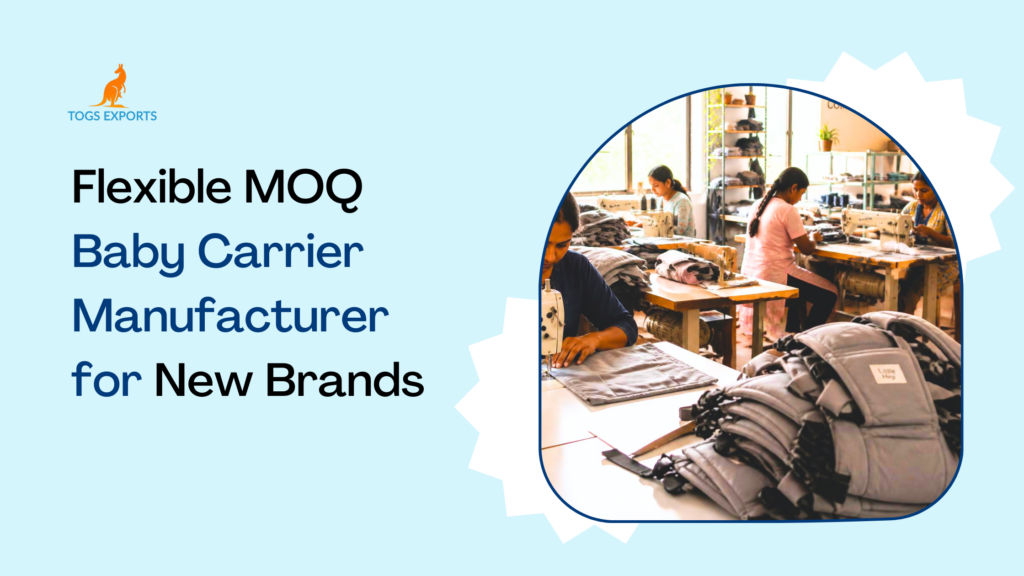
Many emerging baby brands begin with a clear product idea but limited production volume. Large manufacturing requirements often make it difficult for smaller brands to move forward confidently. This is why flexible production support has become increasingly important in the baby carrier industry. Working with a Flexible MOQ Baby Carrier Manufacturer allows brands to develop products without committing to very high quantities during the early stages. For many retailers and startups, flexibility during manufacturing creates better control over product planning and inventory management. It also allows them to refine products gradually instead of rushing directly into large scale production. At Togs Exports, we understand that early stage brands require manufacturing systems that support both development and controlled growth. Why Low MOQ Carrier Production Helps New Brands New brands often test the market before expanding production. A structured Low MOQ Carrier Production system allows them to evaluate customer response without overloading inventory. This helps reduce unnecessary production pressure during the early launch phase. Smaller production quantities also give retailers more room to improve the product after initial feedback. Through Low MOQ Carrier Production, manufacturers can support design refinement while maintaining controlled manufacturing standards. This approach also reduces the financial risk associated with large inventory commitments. Emerging brands can focus on building stable product performance before moving into higher production volumes. How Startup Baby Carrier Manufacturing Supports Product Development Product development becomes more manageable when manufacturing systems remain flexible. Startup Baby Carrier Manufacturing allows brands to move step by step through sampling, refinement, and production. Manufacturers can evaluate stitching, material handling, and structure without immediately scaling into large production runs. During Startup Baby Carrier Manufacturing, brands gain more visibility into how their products are built and refined. This process also improves communication between manufacturers and retailers. Product corrections and refinements become easier to manage before finalizing long term production systems. Why Small Batch Carrier Production Improves Manufacturing Control Large production volumes can create pressure during early development stages. In contrast, Small Batch Carrier Production gives manufacturers better control over technical adjustments and workflow consistency. Manufacturers can monitor stitching quality, panel alignment, and finishing details more closely in smaller batches. Through Small Batch Carrier Production, teams can identify improvements before scaling the workflow into larger production quantities. This process also supports gradual product refinement. Retailers can review how the product performs in practical use and make necessary adjustments without disrupting large scale inventory. How Flexible MOQ Baby Carrier Manufacturer Systems Reduce Production Risks One of the biggest challenges for emerging brands is balancing product development with production costs. A structured Flexible MOQ Baby Carrier Manufacturer system reduces this pressure by allowing production to grow gradually. At Togs Exports, we combine Low MOQ Carrier Production, controlled Startup Baby Carrier Manufacturing, and stable Small Batch Carrier Production systems to support developing brands. This approach allows us to maintain manufacturing consistency while offering flexibility during the early production stages. Rather than forcing high production quantities immediately, flexible MOQ systems allow brands to focus on refinement, testing, and gradual market expansion. This creates a more stable manufacturing workflow and reduces avoidable production risks. Why Retailers Prefer Flexible Manufacturing Partnerships Retailers today value manufacturing partners who understand development stages rather than focusing only on volume. Flexible production systems help brands move through sampling and refinement with greater confidence. A structured Flexible MOQ Baby Carrier Manufacturer approach allows retailers to improve products gradually while maintaining quality standards. It also creates better inventory management and more efficient production planning. At Togs Exports, we focus on supporting brands through practical manufacturing systems rather than rigid production models. Our approach helps retailers develop products steadily while maintaining production transparency and consistency. If you are planning to launch or expand your baby carrier product range and need flexible manufacturing support, we would be glad to discuss your requirements. Phone: +91 99447 50075 Website: www.togsexports.com FAQ 1. What does flexible MOQ mean in manufacturing? A Flexible MOQ Baby Carrier Manufacturer allows brands to start production with smaller order quantities instead of large volume commitments. 2. Why is low MOQ important for startups? Low MOQ Carrier Production helps startups test products and manage inventory without excessive production costs. 3. How does small batch production improve quality? Small Batch Carrier Production allows manufacturers to monitor stitching, structure, and finishing more closely during production. 4. Can product changes be made during low MOQ production? Yes, flexible production systems make it easier to refine products before scaling into larger production quantities. 5. Why do emerging brands prefer flexible manufacturing? Flexible systems reduce production risk, improve inventory control, and support gradual product development.

How Flexible MOQ Supports Emerging Baby Carrier Brands Read More »

Why Retailers Ask for Customized Baby Carrier Samples?

Why Retailers Ask for Customized Baby Carrier Samples?

Retailers today expect more than ready made products. Many brands want carriers that reflect their own design direction, functionality, and product identity. This is why sample development has become an important stage before production begins. Through Customized Baby Carrier Samples, retailers can review how the product performs in real conditions before approving bulk manufacturing. A sample is not simply a preview of the final product. It is part of the development system that helps manufacturers and retailers align technical details before production starts. At Togs Exports, we use structured sample development to refine products, reduce production errors, and improve consistency across manufacturing batches. Why Custom Baby Carrier Sampling Improves Product Accuracy Every brand approaches product development differently. Some retailers focus on comfort and flexibility, while others prioritize structure and usability. Through Custom Baby Carrier Sampling, manufacturers can translate these expectations into a workable product. This stage allows manufacturers to test fabric behavior, stitching methods, and structural alignment before production begins. During Custom Baby Carrier Sampling, even small adjustments in dimensions or reinforcement areas can improve product performance significantly. Without proper sampling, production issues may appear later in larger batches. Correcting those problems during manufacturing increases both time and material waste. This is why structured sample development improves long term production accuracy. How Prototype Carrier Manufacturing Supports Product Refinement A prototype helps manufacturers evaluate how the carrier performs in practical usage conditions. Through Prototype Carrier Manufacturing, the product moves from concept into a physical sample that can be reviewed and adjusted. Manufacturers test fit, balance, panel positioning, and support areas during this stage. The goal is to identify issues before final production starts. A stable Prototype Carrier Manufacturing process also helps retailers understand how the final product will look and function. This stage often includes multiple refinements before the design becomes production ready. Each revision improves stability and reduces manufacturing variation later in the workflow. Why Product Sample Refinement Matters Before Production The first version of a product rarely becomes the final version. Most baby carriers require adjustments during development. Product Sample Refinement helps manufacturers improve technical details without disrupting future production systems. This process includes reviewing stitching alignment, load handling areas, strap positioning, and overall usability. During Product Sample Refinement, manufacturers ensure that every component works together correctly before approval. Retailers benefit because the final product becomes more reliable and production ready. Refinement also reduces the possibility of repeated corrections after manufacturing begins. This creates a more stable workflow for both retailers and manufacturers. How Customized Baby Carrier Samples Reduce Manufacturing Errors Production errors usually begin with unclear development stages. A structured Customized Baby Carrier Samples process helps eliminate confusion between design expectations and manufacturing execution. At Togs Exports, we combine Custom Baby Carrier Sampling, controlled Prototype Carrier Manufacturing, and detailed Product Sample Refinement to improve production stability. Each stage allows us to evaluate the product before moving into larger scale manufacturing. This approach helps reduce inconsistencies across production batches. It also improves communication between retailers and manufacturing teams because the approved sample becomes the production reference. Why Retailers Prefer Structured Sample Development Retailers who work through a proper development system gain more visibility into the manufacturing process. They can review technical adjustments, request modifications, and approve the product with greater confidence. A structured Customized Baby Carrier Samples process creates better long-term production results. It improves consistency, reduces avoidable corrections, and helps maintain product quality across future batches. At Togs Exports, we focus on making sample development part of the manufacturing workflow rather than treating it as a separate stage. Our process supports product refinement, production consistency, and practical usability before final manufacturing begins. If you are planning to develop customized baby carrier products and need structured manufacturing support, we would be glad to discuss your requirements. Phone: +91 99447 50075 Website: www.togsexports.com FAQ 1. What are customized baby carrier samples? Customized Baby Carrier Samples are prototype products developed before production to test design, structure, and functionality. 2. Why is custom sampling important before manufacturing? Custom Baby Carrier Sampling helps identify product issues early and improves production accuracy before bulk manufacturing starts. 3. What happens during prototype carrier manufacturing? During Prototype Carrier Manufacturing, manufacturers create physical samples to evaluate fit, stitching, and structural performance. 4. Why does sample refinement matter? Product Sample Refinement improves usability, stability, and production consistency before final approval. 5. How do customized samples reduce manufacturing errors? They help manufacturers and retailers align technical details before production begins, reducing inconsistencies in future batches.

Why Retailers Ask for Customized Baby Carrier Samples? Read More »

How OEM Baby Carrier Development Reduces Product Errors

How OEM Baby Carrier Development Reduces Product Errors

A product may look complete during the design stage, but real challenges often appear only after development begins. Small issues in structure, stitching, or measurements can create larger production problems later. This is why many retailers and baby brands now pay closer attention to the development stage before bulk manufacturing starts. A structured OEM Baby Carrier Development process helps identify these issues early and improves production accuracy. Retailers who work closely with manufacturers during development gain better control over product performance. They can refine the design before production moves into larger quantities. This approach not only improves consistency but also reduces delays and material waste during manufacturing. At Togs Exports, we treat development as an important part of building a stable and reliable product. Why Product Refinement Matters Before Production Every baby carrier design goes through adjustments before it becomes production-ready. Even small changes in panel structure or strap positioning can affect usability and comfort. Through Baby Carrier Product Refinement, manufacturers test how the carrier performs under practical conditions. This stage allows teams to improve the design without affecting large-scale production later. Stitching balance, fabric behavior, and structural alignment are reviewed carefully during Baby Carrier Product Refinement. These refinements help reduce manufacturing errors and improve product stability across batches. Manufacturers who skip refinement often face inconsistencies during production. Small issues become more difficult to correct once production has already started. This is why a structured development system creates better long-term results for retailers and brands. How OEM Sample Approval Process Improves Accuracy Before moving into final production, manufacturers create approval samples to confirm that the product meets expectations. The OEM Sample Approval Process ensures that all technical and visual details are verified before production begins. During this stage, manufacturers evaluate stitching quality, measurements, fitting, and finishing. Retailers also review the sample to ensure it aligns with their requirements. A stable OEM Sample Approval Process reduces confusion between development and production teams. This process also helps manufacturers standardize the production method. Once the sample receives approval, it becomes the reference for future batches. This improves production consistency and reduces avoidable errors during manufacturing. Why Carrier Design Correction Workflow Is Important A product rarely reaches its final form in its first version. Most baby carriers require adjustments during development. The Carrier Design Correction Workflow allows manufacturers to identify and correct technical issues before production begins. This workflow focuses on improving functionality without affecting the overall design concept. Manufacturers review factors such as load handling, panel shaping, and strap integration. Through a controlled Carrier Design Correction Workflow, production teams can refine the carrier step by step. These corrections reduce production risks and improve manufacturing efficiency. Retailers benefit because the final product performs more consistently in actual use. This approach also helps avoid repeated revisions after bulk production starts. How OEM Baby Carrier Development Supports Production Stability Production stability depends heavily on how well the product is developed before manufacturing. A structured OEM Baby Carrier Development system creates a clear connection between design and production. It allows manufacturers to test, refine, and standardize the product before scaling output. At Togs Exports, our development process focuses on reducing variation during manufacturing. We combine Baby Carrier Product Refinement, a structured OEM Sample Approval Process, and a controlled Carrier Design Correction Workflow to improve product accuracy. This approach helps maintain production consistency while reducing avoidable manufacturing issues. It also gives retailers better confidence in the final product because the carrier has already gone through multiple stages of refinement before production begins. Why Retailers Benefit From Structured Development Systems Retailers today expect more than product availability. They look for manufacturing partners who can maintain consistency across every stage of production. A structured OEM Baby Carrier Development process helps manufacturers deliver products that match approved standards. When development and production work together, the final product becomes more reliable. Retailers face fewer product issues and gain better visibility into the manufacturing process. This improves long-term business relationships and product stability. At Togs Exports, we focus on building products through controlled development systems rather than rushing directly into production. Our process helps ensure that every baby carrier is refined, tested, and aligned with manufacturing standards before final output begins. If you are planning to develop a new product range and want manufacturing support through a structured development process, we would be glad to discuss your requirements. Phone: +91 99447 50075 Website: www.togsexports.com FAQ 1. What is OEM baby carrier development? OEM Baby Carrier Development is the process of refining and preparing a baby carrier design before final production begins. 2. Why is sample approval important in manufacturing? The OEM Sample Approval Process helps verify measurements, stitching, and product structure before production starts. 3. What happens during product refinement? During Baby Carrier Product Refinement, manufacturers improve design accuracy, fitting, and usability through controlled adjustments. 4. How does design correction reduce production errors? The Carrier Design Correction Workflow identifies technical issues early and corrects them before bulk manufacturing begins. 5. Why do retailers prefer structured OEM development? Structured development improves production consistency, reduces manufacturing errors, and creates more stable product output.

How OEM Baby Carrier Development Reduces Product Errors Read More »

Which Baby Carrier Is Suitable by Age? Complete Guide!!

Which Baby Carrier Is Suitable by Age? Complete Guide!!

Choosing the right carrier is not only about design or comfort. It depends heavily on the baby’s age and developmental stage. Many retailers overlook this connection and focus only on product appearance. However, a well-planned Baby Carrier by Age Guide helps ensure that each product fits real usage needs. When manufacturers design carriers, they consider how the baby grows and how support requirements change over time. Understanding age-based suitability helps retailers build a more practical product range. It also improves customer satisfaction because the product matches expectations. As a manufacturer, we focus on aligning design and production with each stage of growth. This ensures that the carrier performs correctly across different age groups. Newborn Stage and Soft Support Requirements Newborns require maximum support and close contact. Their body structure is still developing, so carriers must provide gentle positioning. At this stage, wrap carriers and sling carriers are commonly preferred. These designs allow the baby to stay close while maintaining flexibility. From a manufacturing perspective, fabric selection becomes critical. Soft materials with controlled stretch help maintain comfort without losing support. This stage focuses on safety and natural positioning rather than structure. Proper production ensures that the carrier adapts to the baby’s shape without pressure. Infant Stage and Structured Support Transition As the baby grows, the need for structured support increases. Infants require better weight distribution and stability. This is where buckle carriers become more suitable. They provide a defined structure that supports longer carrying durations. Manufacturers focus on panel shaping and reinforcement during this stage. The carrier must distribute weight evenly across the shoulders and waist. This improves comfort for the caregiver while maintaining support for the baby. Structured production ensures consistency across every unit. Baby Carrier by Age Guide for Growing Babies A proper Baby Carrier by Age Guide helps retailers understand how product suitability changes over time. As babies become more active, carriers must allow movement while maintaining stability. Sling carriers and adjustable designs are often used in this stage. Manufacturing focuses on flexibility combined with strength. The carrier must adapt to different positions without losing structure. This balance ensures that the product remains usable as the baby grows. Retailers benefit from offering products that match this transition phase. Toddler Stage and Increased Weight Support Toddlers require carriers that handle higher weights and active movement. At this stage, durability becomes a key factor. Structured carriers and toddler carriers are designed to support increased load without compromising comfort. Manufacturers use stronger materials and reinforced stitching for this stage. The carrier must maintain its shape even with continuous use. Proper production systems ensure that the product performs consistently across all batches. This improves long-term reliability. Why Age-Based Selection Matters for Retailers Retailers who follow a Baby Carrier by Age Guide can create a more effective product range. Each carrier serves a specific purpose, and understanding this helps reduce customer confusion. It also improves product performance in real usage. At Togs Exports, we design carriers based on age-specific requirements. Our manufacturing approach ensures that each product aligns with the correct stage of growth. This helps retailers offer reliable products that meet customer expectations. If you are planning to build your product range based on age suitability and want to work with an experienced manufacturer, we would be glad to discuss your requirements. Phone: +91 99447 50075 Website: www.togsexports.com FAQ: Why is age important when choosing a baby carrier? Age determines the level of support required, including head, neck, and weight distribution. Which carrier is best for newborns? Wrap carriers and sling carriers are suitable because they provide soft support and close contact. When should structured carriers be used? Structured carriers are suitable from the infant stage when the baby needs more support. Are toddler carriers different from infant carriers? Yes, toddler carriers are designed for higher weight and require stronger materials and construction. How does manufacturing affect age suitability? Manufacturing ensures that each carrier provides the correct structure, flexibility, and durability for each stage. READ MORE: Baby Carrier Manufacturer vs Supplier: Key Differences What Are the Steps in Our Baby Carrier Sampling Process What Retailers Should Know About Export-Ready Baby Carrier Manufacturing!!

Which Baby Carrier Is Suitable by Age? Complete Guide!! Read More »

Baby Carrier Manufacturer vs Supplier: Key Differences

Baby Carrier Manufacturer vs Supplier: Key Differences

Retailers often assume that sourcing from any supplier will deliver the same results. However, the difference between a Baby Carrier Manufacturer vs Supplier becomes clear only after products reach customers. Manufacturing directly affects product structure, durability, and consistency. This is why many retailers now focus on understanding where and how their products are actually made. A supplier may provide access to products, but a manufacturer builds them from the ground up. This distinction shapes the entire product experience. Retailers who recognise this difference gain better control over their product line and long-term brand reliability. Understanding the Role of a Manufacturer in Production A manufacturer manages every stage of production, from material selection to final assembly. This allows them to maintain consistency across each product batch. In a structured environment, Carrier Quality Inspection Process and production control go hand in hand. Manufacturers follow defined systems to ensure that each product meets the same standard. This includes stitching accuracy, panel alignment, and load handling. These processes create predictable results that retailers can rely on. How Suppliers Operate in the Supply Chain A supplier focuses on sourcing and distributing products rather than producing them. They may work with multiple factories, which can lead to variation in quality. This makes it harder to maintain consistency across orders. Without direct involvement in production, suppliers cannot always control how products are made. This limitation affects long-term product reliability. Retailers may face inconsistencies that impact customer satisfaction. Why Production Control Impacts Product Quality Product quality is not defined at the end of production. It is built into every stage of the process. A manufacturer ensures that materials, stitching, and structure remain consistent across batches. This level of control improves product durability. In contrast, suppliers may not have visibility into production changes. Even small variations can affect how the product performs. This is why retailers often prefer working directly with manufacturers. Comparing Consistency Between Manufacturer and Supplier Consistency is essential for building trust with customers. A manufacturer uses structured systems to repeat the same process for every order. This ensures that each product matches previous batches. Suppliers may offer convenience, but consistency can vary depending on sourcing. This creates uncertainty for retailers who rely on stable product performance. Understanding the Baby Carrier Manufacturer vs Supplier difference helps avoid this risk. Why Retailers Prefer Direct Manufacturing Partnerships Retailers who work with manufacturers gain better communication and control. They can discuss product requirements directly with the production team. This improves clarity and reduces errors. Direct manufacturing also allows for better planning and consistent supply. Retailers can align their product strategy with production capabilities. This supports long term business growth and reliability. At Togs Exports, we operate as a direct manufacturer with controlled production systems. We focus on maintaining consistency, quality, and structured output across every batch. If you are evaluating your sourcing approach and want clarity on Baby Carrier Manufacturer vs Supplier, we would be glad to discuss your requirements. Phone: +91 99447 50075 Website: www.togsexports.com FAQ What is the main difference between a manufacturer and a supplier? A manufacturer produces the product, while a supplier sources and distributes it. Why do retailers prefer manufacturers over suppliers? Manufacturers provide better quality control, consistency, and production visibility. Does working with a supplier affect product quality? Yes, since suppliers may not control production, quality can vary between batches. Can manufacturers ensure consistent product output? Yes, structured production systems help maintain the same quality across all orders. Which is better for long-term growth? Working with a manufacturer is better for maintaining quality, consistency, and brand reliability. READ MORE: Types of Baby Carriers Manufactured by Togs Exports What Are the Steps in Our Baby Carrier Sampling Process What Happens in Baby Carrier Sampling Process Explained

Baby Carrier Manufacturer vs Supplier: Key Differences Read More »

Types of Baby Carriers Manufactured by Togs Exports

Types of Baby Carriers Manufactured by Togs Exports

When retailers plan their product range, they often start by understanding what types of baby carriers are actually available from a manufacturer. A baby carrier is not a single product category. It includes multiple designs, each created for a different stage and use case. At Togs Exports, we focus on developing a complete range of baby carriers with structured production systems. The goal is to ensure that every product performs reliably in real usage conditions while maintaining consistent manufacturing standards. Retailers who work directly with a manufacturer gain clarity about how each carrier is built and why it is designed that way. This helps them choose products that align with customer expectations. It also allows them to create a product mix that covers different age groups and usage needs. As a direct manufacturer, we focus on both product variety and production discipline to support long-term retail growth. Structured Buckle Carriers for Everyday Use Buckle carriers are one of the most widely used designs because they provide stability and ease of use. They include shoulder straps and waist belts that help distribute weight evenly across the body. This makes them suitable for longer carrying durations and daily use. Parents prefer this type because it combines comfort with structured support. In our production, we focus on Structured Baby Carrier Production to ensure that every buckle carrier maintains its shape under load. Panel alignment, stitching strength, and reinforcement points are carefully controlled. This helps the carrier perform consistently across different batches. A stable structure ensures that both the baby and the caregiver experience balanced support. Flexible Sling Carriers for Quick Adjustments Sling carriers are designed for flexibility and quick adjustments. They allow parents to carry the baby in different positions without using complex structures. This makes them suitable for short-duration use and quick movement during daily routines. The simplicity of the design requires precise manufacturing to ensure proper support. Our approach focuses on fabric behavior and smooth adjustment systems. While the structure appears simple, it must handle weight effectively. This is where controlled manufacturing becomes important. Proper material selection and stitching ensure that the carrier remains secure while allowing flexibility. Soft Wrap Carriers for Close Contact Support Wrap carriers provide a different experience compared to structured designs. They rely on fabric wrapping to hold the baby close to the caregiver. This creates a natural and comfortable carrying experience, especially for newborns. The flexibility of the fabric allows the carrier to adapt to different body shapes. During production, we ensure that the fabric maintains the right balance between stretch and support. Too much stretch can reduce stability, while too little can affect comfort. Our manufacturing process ensures that each wrap carrier performs consistently. This balance improves usability and supports long term comfort. Baby Carrier Types Manufacturer Approach in Product Range As a Baby Carrier Types Manufacturer, we focus on creating products that serve different usage needs rather than offering limited variations. Each carrier type is developed with a specific purpose in mind. This approach helps retailers build a complete product range that covers multiple customer segments. We integrate production discipline into every stage. This includes material selection, stitching consistency, and structural stability. By maintaining these standards, we ensure that every product reflects the same level of quality. Retailers benefit from predictable performance across all product categories. Hip Seat and Toddler Carriers for Growing Needs As babies grow, their carrying needs change. Hip seat carriers provide quick support for short durations. They allow parents to hold the baby comfortably without carrying the full weight on their arms. This makes them practical for everyday use. Toddler carriers are designed for higher weight and active movement. They require stronger materials and reinforced construction. In our manufacturing process, we focus on durability and load handling. This ensures that the carrier remains stable even with increased weight. Retailers can confidently offer these products to customers looking for long-term solutions. At Togs Exports, we develop each product with a clear focus on usability and manufacturing consistency. Our approach combines structured production systems with practical design. This helps retailers build a reliable product range that meets different customer needs. If you are looking to source a complete range from a dependable manufacturer, we would be glad to discuss your requirements. Phone: +91 99447 50075 Website: www.togsexports.com FAQ What types of baby carriers are commonly manufactured? Manufacturers typically produce buckle carriers, sling carriers, wrap carriers, hip seat carriers, and toddler carriers to suit different needs. How do buckle carriers differ from wrap carriers? Buckle carriers use structured support and straps, while wrap carriers rely on fabric wrapping for flexibility and close contact. Are sling carriers suitable for all age groups? Sling carriers are mostly suitable for newborns and infants, but can also be used for short durations with older babies. Why is manufacturing important in baby carriers? Manufacturing ensures proper structure, durability, and safety, which directly affects product performance. Can retailers source multiple carrier types from one manufacturer? Yes, working with a manufacturer like Togs Exports allows retailers to source a complete product range with consistent quality. READ MORE: What Are the Steps in Our Baby Carrier Sampling Process How Baby Carrier Load Testing Ensures Product Strength? Why Work With a Private Label Baby Carrier Manufacturer?

Types of Baby Carriers Manufactured by Togs Exports Read More »

Steps in Our Baby Carrier Sampling Process in Manufacturing Unit

What Are the Steps in Our Baby Carrier Sampling Process

A product becomes real the moment it moves from concept to sample. This stage reveals what works and what needs refinement. Many retailers focus on the final product, but the real foundation is built earlier. The Sampling Process in Manufacturing Unit defines how well a product performs once it reaches production. At this stage, design ideas meet practical execution. Materials, structure, and usability come together for the first time. This is where clarity replaces assumption. How Carrier Prototype Development Shapes the Initial Sample Every product begins with a prototype. Carrier Prototype Development transforms design inputs into a physical sample that can be evaluated. This stage focuses on structure, proportions, and material compatibility. Manufacturers test how fabric behaves under load and how panels align during use. Through Carrier Prototype Development, small adjustments improve fit and durability. These early refinements prevent larger issues later. At the same time, the Product Sampling Workflow begins to take shape. Each step builds toward a stable and workable design. How Product Sampling Workflow Refines the Design Once the first sample is ready, the next stage focuses on improvement. The Product Sampling Workflow involves reviewing the prototype, identifying gaps, and refining the design. Manufacturers evaluate stitching strength, comfort, and usability during this stage. Feedback from testing helps guide necessary changes. The Product Sampling Workflow ensures that each revision moves closer to the final product. During this process, Carrier Prototype Development continues alongside refinements. Each version improves performance and prepares the product for production readiness. Why Sample Approval Manufacturing Is a Critical Stage The final stage before bulk production is approval. Sample Approval Manufacturing confirms that the product meets all required standards. This includes structure, comfort, and consistency. Manufacturers produce the approved sample under production conditions to verify stability. Sample Approval Manufacturing ensures that the same methods can be repeated at scale without variation. At the same time, the Sampling Process in Manufacturing Unit ensures that every detail aligns with production capability. This reduces the risk of unexpected issues during bulk orders. How Sampling Process in Manufacturing Unit Ensures Consistency Consistency begins during sampling. The Sampling Process in Manufacturing Unit defines how each product will be produced later. It sets the standard for stitching, material handling, and assembly. By following a structured Product Sampling Workflow, manufacturers create repeatable processes. This ensures that every unit matches the approved sample. Meanwhile, Sample Approval Manufacturing confirms that these standards hold during production. Combined with careful Carrier Prototype Development, it builds a reliable foundation for consistent output. Why Retailers Should Focus on the Sampling Stage Retailers who actively engage in the Sampling Process in Manufacturing Unit gain better control over product quality. They can review prototypes, suggest improvements, and ensure that the final product meets expectations. At Togs Exports, we treat sampling as a critical part of manufacturing. Our approach combines precise Carrier Prototype Development, a structured Product Sampling Workflow, and reliable Sample Approval Manufacturing. This ensures that every product is ready for consistent bulk production. If you are planning to develop a new product and want to understand our Sampling Process in Manufacturing Unit, we would be glad to support your requirements. Phone: +91 99447 50075 Website: www.togsexports.com FAQ What is the sampling process in manufacturing? It is the stage where a product is developed, tested, and refined before bulk production begins. How many samples are usually created? Multiple samples are developed to improve design, fit, and performance before final approval. Can changes be made during sampling? Yes, adjustments are made throughout the process to refine the product. What is sample approval manufacturing? It is the final stage where the approved design is tested under production conditions. Why is sampling important before production? It ensures product accuracy, reduces risk, and helps maintain consistency in bulk manufacturing. READ MORE: Why Serious Retailers Only Work with Direct Baby Carrier Manufacturers!! How Baby Sling Ring Carrier Manufacturer Ensure Comfort Why Baby Hip Seater Manufacturer Are in High Demand?

What Are the Steps in Our Baby Carrier Sampling Process Read More »

How Baby Carrier Load Testing Ensures Product Strength?

How Baby Carrier Load Testing Ensures Product Strength?

A baby carrier must perform under real pressure, not just in appearance. Parents rely on it to carry weight safely during daily movement. This makes strength a critical factor in product performance. Retailers who understand this look beyond design and focus on how products are tested. The Baby Carrier Load Testing stage plays a key role in ensuring that every carrier can handle real usage conditions. Manufacturing alone does not guarantee reliability. Testing confirms whether the product meets required strength standards. This is where load testing becomes an essential part of the process. How Load Bearing Carrier Testing Evaluates Real Conditions A carrier must support both static weight and movement. Load Bearing Carrier Testing evaluates how the product performs under these conditions. Manufacturers apply controlled weight to simulate real life usage. During Load Bearing Carrier Testing, the focus stays on stress points such as stitching, straps, and panels. These areas carry most of the load. If any weakness exists, it becomes visible during this stage. At the same time, the Weight Capacity Testing Process ensures that the carrier maintains its structure under continuous pressure. This helps confirm long term durability. Why Weight Capacity Testing Process Is Critical Every baby carrier must meet a defined weight limit. The Weight Capacity Testing Process verifies that the product can safely support this load without failure. Manufacturers apply repeated testing cycles to check how the carrier behaves over time. This includes holding weight for extended periods and simulating repeated use. The Weight Capacity Testing Process ensures that the carrier does not lose strength under normal conditions. In parallel, Carrier Strength Validation confirms that the product maintains its performance after testing. This ensures that the carrier remains reliable even after prolonged use. The Role of Carrier Strength Validation in Manufacturing Testing alone is not enough. Manufacturers must confirm that the product consistently meets strength requirements. Carrier Strength Validation ensures that every tested carrier meets defined performance standards. This process involves reviewing test results and verifying that all components perform as expected. During Carrier Strength Validation, manufacturers check stitching integrity, strap durability, and overall structure. Combined with Load Bearing Carrier Testing, this stage ensures that the product is ready for real world use. It also helps maintain consistency across production batches. How Baby Carrier Load Testing Supports Product Reliability Retailers need products that perform consistently across every shipment. The Baby Carrier Load Testing process helps achieve this by setting clear performance standards. Manufacturers use controlled testing methods to ensure that each carrier meets the same strength requirements. This reduces variation and improves product reliability. Through consistent Load Bearing Carrier Testing, manufacturers can identify and correct issues before products reach the market. At the same time, the Weight Capacity Testing Process and Carrier Strength Validation work together to maintain quality across all units. This ensures that customers receive a dependable product every time. Why Strength Testing Matters for Retailers Retailers who focus on product strength reduce the risk of returns and customer complaints. A well tested carrier builds trust and supports long term brand value. At Togs Exports, we treat testing as an essential part of manufacturing. Our approach combines detailed Baby Carrier Load Testing, controlled Load Bearing Carrier Testing, and a structured Weight Capacity Testing Process. We also ensure thorough Carrier Strength Validation to maintain consistent quality. If you are looking to source reliable products backed by strong testing systems, we would be glad to discuss your requirements. Phone: +91 99447 50075 Website: www.togsexports.com Frequently Asked Questions (FAQs) What is baby carrier load testing? It is a process where carriers are tested under weight to ensure they can handle real usage safely. Why is load testing important? It helps identify weaknesses and ensures the product meets safety and durability standards. What is the weight capacity testing process? It checks whether the carrier can support the specified weight over time without failure. How is strength validated in baby carriers? Through testing results that confirm stitching, straps, and structure perform reliably. Does load testing affect production quality? Yes, it helps maintain consistent standards across all manufactured products. READ MORE: How OEM Baby Carrier Manufacturer Support Brands? How Baby Sling Ring Carrier Manufacturer Ensure Comfort How Baby Wrap Carrier Manufacturer Ensure Flexibility

How Baby Carrier Load Testing Ensures Product Strength? Read More »

Why Work With a Private Label Baby Carrier Manufacturer?

Why Work With a Private Label Baby Carrier Manufacturer?

Brand identity drives repeat sales. Retailers who build their own label gain more control over how customers perceive their products. Instead of relying on generic designs, they shape collections that reflect their positioning. This is why many brands choose to work with a Private Label Baby Carrier Manufacturer who can support both development and production. Private label manufacturing allows retailers to focus on their brand while the manufacturer manages the technical side. This creates a clear path from idea to finished product without losing control over quality. How Private Label Carrier Production Supports Brand Control Retailers need consistency across every product they offer. Private Label Carrier Production ensures that each unit follows the same specifications, from structure to finishing. Manufacturers align materials, stitching, and assembly methods with the brand’s requirements. This approach helps maintain uniform quality across all batches. Through Private Label Carrier Production, retailers can confidently scale their product range without worrying about variation. At the same time, controlled systems allow the manufacturer to repeat the same process for every order. This consistency supports long term brand growth. Why Custom Branding Manufacturing Matters Brand visibility depends on more than just logos. It includes design details, fabric choices, and overall presentation. Custom Branding Manufacturing allows retailers to integrate these elements directly into the product. Manufacturers apply branding features during production rather than after. This ensures that labels, tags, and design elements remain consistent and durable. With Custom Branding Manufacturing, the product becomes a true reflection of the brand. This process also helps retailers stand out in a competitive market. A well defined product identity creates stronger recognition and customer trust. The Role of White Label Carrier Development in Flexibility Not all retailers begin with fully developed designs. Some prefer to adapt existing models and customise them over time. White Label Carrier Development supports this approach. Manufacturers provide base designs that can be modified according to brand requirements. This allows retailers to enter the market quickly while still building a unique identity. Through White Label Carrier Development, brands can test new ideas without starting from scratch. Combined with Private Label Carrier Production, this flexibility helps retailers adjust their product strategy as demand evolves. Why Retailers Choose Private Label Manufacturing Retailers are moving toward private label solutions because they offer greater control and long term value. Working with a Private Label Baby Carrier Manufacturer allows them to manage product quality, branding, and production timelines in one system. Structured Private Label Carrier Production, supported by precise Custom Branding Manufacturing, ensures that each product meets the same standards. Meanwhile, White Label Carrier Development provides flexibility for brands that want to expand gradually. At Togs Exports, we focus on delivering consistent manufacturing systems that support brand development. Our approach combines reliable Private Label Carrier Production, detailed Custom Branding Manufacturing, and adaptable White Label Carrier Development to meet retail needs. If you are planning to build your own product line and want to work with a Private Label Baby Carrier Manufacturer, we would be glad to discuss your requirements. Phone: +91 99447 50075 Website: www.togsexports.com Frequently Asked Questions (FAQs): What is a private label baby carrier manufacturer? It is a manufacturer that produces baby carriers under your brand name with customized design and features. Can I fully customize my product? Yes, customization can include design, materials, and branding elements based on your requirements. What is the difference between private label and white label? Private label involves unique branding and customization, while white label starts with existing designs that can be adapted. How is quality maintained in private label production? Through controlled production systems and consistent quality checks during manufacturing. Is private label suitable for new brands? Yes, it helps new brands build identity while relying on experienced manufacturing support. READ MORE: What Happens in Baby Carrier Sampling Process Explained How OEM Baby Carrier Manufacturer Support Brands? Why Retailers Choose a Baby Carrier Production Company?

Why Work With a Private Label Baby Carrier Manufacturer? Read More »