
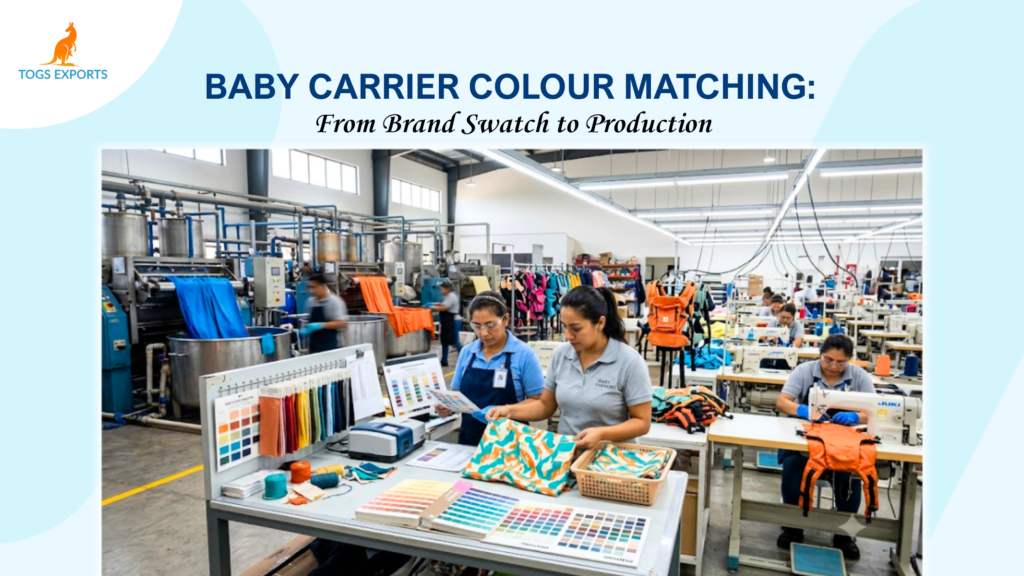
A fabric colour can look perfect on a sample, but the same shade may look different when the bulk order arrives. Lighting, fabric composition, dyeing conditions, finishing, and production batches can all influence the final appearance. For private-label brands, these differences can affect product consistency and the overall look of a collection.
Baby carrier colour matching helps brands and manufacturers establish a clear colour reference before production begins. Rather than relying on colour names such as navy, beige, or sage green, both sides need an agreed reference and a process for checking the fabric against it.
For companies involved in baby carrier manufacturing, colour approval should be part of product development, not a last-minute check before shipment.
Why Colour Matching Matters in Baby Carrier Manufacturing
Colour is often one of the first things customers notice about a product. A small variation may seem insignificant on its own, but it can become noticeable when several carriers appear together in a product range.
For example, a brand may approve a beige carrier for its new collection. If the bulk fabric looks warmer, darker, or more yellow than the approved sample, the finished product may not match the brand’s intended appearance.
Consistent baby carrier colour matching helps brands maintain a recognizable product range across samples, production batches, and repeat orders.
It also gives the manufacturer a clearer standard to follow when sourcing fabric and reviewing finished materials.
What Causes Colour Differences Between Samples and Bulk Production?
Colour variation can occur for several reasons. Understanding these factors helps brands ask better questions during product development.
Fabric Composition
Different fibres absorb and reflect dyes differently. Cotton, polyester, and blended fabrics may produce different colour results even when the dye shade appears similar in a reference image.
The fabric construction and finishing process can also influence the final appearance.
Dyeing Conditions
Temperature, dye concentration, processing time, and other dyeing conditions can affect the resulting shade. Even when a supplier follows the same general process, variations can occur between dye lots.
Fabric Finishing
Washing, softening, coating, and other finishing treatments can change how a fabric reflects light. As a result, the final shade may look different from the fabric before finishing.
Lighting Conditions
A colour can appear different under daylight, factory lighting, and retail lighting. This effect makes it important to assess approved fabric samples under consistent lighting conditions.
Different Production Batches
Fabric produced in separate dye lots may show visible shade differences. This becomes particularly important when brands place repeat orders or manufacture the same carrier in several colours.
A reliable baby carrier colour matching process accounts for these variables before the material reaches bulk production.
Start With a Clear Colour Reference
A colour name alone is not enough for accurate production.
Words such as charcoal, cream, olive, and dusty pink can mean different things to different people. Brands should provide a physical fabric swatch or a recognized colour reference wherever possible.
A practical colour approval process may use:
- A physical colour swatch
- A Pantone reference, where appropriate
- The approved fabric sample
- A documented colour code
- The fabric supplier’s shade reference
- A record of the approved dye lot, where available
Digital colour values can help communicate an initial direction, but a screen image cannot fully reproduce how a physical textile looks. Screen settings, image processing, and lighting can all affect the displayed shade.
For this reason, baby carrier colour matching should rely on an agreed physical reference when the project requires close colour control.
How Pantone References Support Colour Approval
Brands often use Pantone references to communicate their preferred colours. These references can help the brand, designer, and manufacturer discuss the intended shade using a shared system.
However, a Pantone reference should not be treated as an automatic guarantee that the finished fabric will match perfectly.
The final appearance depends on the textile, dyeing process, finish, and applicable colour reference system. A colour selected from a printed guide may also appear different when translated into a dyed fabric.
A practical approach is to use the reference to establish the target, then review a physical fabric lab dip or sample before approving bulk production.
This step makes baby carrier colour matching more practical because the decision is based on the actual material rather than a digital preview alone.
The Fabric Lab Dip Approval Process
A lab dip is a small dyed fabric sample prepared to approximate the requested colour before bulk dyeing.
It gives the brand an opportunity to review the proposed shade and request adjustments before committing to a larger quantity.
A typical process includes:
- Share the colour target. The brand provides a physical swatch, colour reference, or approved sample.
- Prepare the lab dip. The dyeing supplier develops a small sample using the intended fabric and process.
- Review the shade. The sample is assessed against the target under suitable lighting.
- Request corrections. The brand identifies whether the shade needs to become lighter, darker, warmer, cooler, or otherwise adjusted.
- Approve the final reference. The approved sample is recorded for production use.
Depending on the material and dyeing process, more than one revision may be necessary.
The important point is to approve the colour before bulk fabric production begins, rather than discovering a mismatch after the carrier has been assembled.
Colour Matching Needs to Continue Into Bulk Production
Approving a lab dip is an important milestone, but it does not remove the need for production checks.
During bulk production, the manufacturer and fabric supplier should follow the agreed colour specification and check incoming material against the approved reference.
A practical inspection process can include:
- Confirming the fabric type and colour reference
- Checking the shade under consistent lighting
- Reviewing the material across the delivered lot
- Separating visibly different shades where necessary
- Recording the approved reference and batch information
- Escalating noticeable variations before cutting begins
These checks help identify problems early.
If a shade difference appears after cutting and stitching, correcting it may require additional material, sorting, or production work. Identifying the variation before cutting gives the brand and manufacturer more options.
Why Fabric Construction Also Matters
Colour is only one part of material approval. The same shade can look different on fabrics with different textures, surface finishes, and constructions.
A smooth woven fabric may reflect light differently from a textured fabric. A brushed or coated surface may also change the way a colour appears.
This is particularly relevant when a brand uses the same colour across several carrier styles.
For example, matching a colour across a wrap carrier and a structured buckle carrier may require separate material evaluations if the fabrics differ.
Therefore, baby carrier colour matching should consider both the colour target and the actual fabric intended for each product.
Managing Colour Across Repeat Orders
Repeat orders create another challenge. A brand may reorder a popular carrier several months after the original production run, but the new fabric may come from a different dye lot.
To improve consistency, brands should retain the approved colour reference and record the relevant material details.
A useful colour approval record includes:
| Record | Purpose |
|---|---|
| Product SKU | Identifies the carrier model |
| Fabric specification | Identifies the approved material |
| Colour reference | Defines the target shade |
| Approved swatch | Provides a physical comparison |
| Approval date | Tracks when the colour was accepted |
| Dye lot or batch details | Supports traceability where available |
| Revision number | Prevents use of outdated references |
| Approval status | Shows whether the material is cleared for production |
This information gives the team a reliable starting point when planning repeat orders. However, a retained swatch does not eliminate the need to inspect new fabric batches.
Common Colour Matching Mistakes
Several avoidable mistakes can lead to colour inconsistencies.
- Approving colours from photographs alone: Images are useful for discussion, but they cannot reliably represent the exact physical textile shade.
- Using vague colour names: Terms such as light grey or dark green do not provide a precise production reference.
- Skipping lab dip approval: Bulk dyeing before shade approval increases the risk of receiving unsuitable fabric.
- Ignoring lighting differences: A sample may appear acceptable under one light source but noticeably different under another.
- Changing materials without reapproval: Different fabric compositions or finishes can affect the final appearance, even when the intended colour remains unchanged.
- Failing to retain the approved reference: Without a documented standard, comparing repeat orders becomes more difficult.
- A defined baby carrier colour matching process helps brands address these issues before they affect finished products.
How Togs Exports Supports Colour Coordination
At Togs Exports, colour decisions form part of the wider product development and manufacturing discussion. For international brands, the intended shade needs to work with the selected fabric, carrier design, branding, and production requirements.
Clear colour references and timely approvals help the manufacturing team coordinate material selection and sample development more effectively.
As a baby carrier manufacturer and exporter, Togs Exports works with brands on customized product development, sampling, OEM and ODM production, and private-label manufacturing.
For brands planning baby carrier manufacturing, the best time to address colour consistency is before bulk production begins. A clear reference, an approved fabric sample, and documented material details create a stronger foundation for repeatable results.
Colour matching may seem like a small detail, but getting it right helps a product range look consistent and professionally developed.
FAQs
1. How do manufacturers match colours for baby carrier fabrics?
Manufacturers use physical swatches, recognized colour references, fabric lab dips, and approved samples. They then compare production fabric against the agreed target under suitable lighting conditions.
2. What is a lab dip in fabric colour matching?
A lab dip is a small dyed fabric sample prepared to approximate a requested shade. Brands review it and approve or request adjustments before bulk dyeing.
3. Can Pantone colours guarantee an exact fabric match?
No. Pantone references can communicate a target shade, but the final textile appearance depends on fibre composition, fabric construction, dyeing, finishing, and the reference system used. Physical sample approval remains important.
4. Why can the same fabric colour look different between production batches?
Differences in dyeing conditions, raw materials, finishing, and dye lots can affect the final shade. Manufacturers should compare incoming material with the approved reference before production.
5. How can private-label brands maintain colour consistency across repeat orders?
Brands should retain approved swatches, document fabric and colour specifications, record batch information where available, and inspect new fabric lots before cutting and assembly.