Baby Carrier

Why Choose an ODM Baby Carrier Manufacturer?

Why Choose an ODM Baby Carrier Manufacturer?

A strong product line does not begin at production. It begins much earlier, at the stage where ideas are shaped into workable designs. Many retailers and brands today are moving beyond ready-made options and looking for more control over how their products are developed. This is where working with an ODM Baby Carrier Manufacturer becomes valuable. ODM manufacturing allows brands to collaborate directly on product design while relying on the manufacturer’s technical expertise. It creates a balance between creativity and production efficiency. For retailers aiming to build a distinct identity, this approach offers both flexibility and reliability. How ODM Baby Carrier Manufacturer Supports Product Innovation Product innovation often requires more than a design concept. It needs a practical understanding of materials, structure, and usability. An experienced ODM Baby Carrier Manufacturer plays a key role in shaping these ideas into functional products. In Baby Carrier ODM Production, the process begins with concept development and design refinement. Each detail, from fabric selection to panel structure, is carefully evaluated. This ensures that the carrier is not only visually appealing but also performs well in real use. The Custom Carrier Development Process allows brands to explore new ideas while maintaining manufacturing feasibility. Also, we adjust the production plan during development to improve comfort, durability, and overall performance. Why Development Process Matters in ODM Infant Carrier Manufacturing The development stage is where most product challenges are identified and resolved. Without a structured process, small design issues can lead to major production problems later. In ODM Infant Carrier Manufacturing, testing and refinement are essential. Each prototype goes through evaluation to check fit, strength, and usability. This reduces the risk of defects during bulk production. A well-defined Custom Carrier Development Process ensures that every design element is aligned with manufacturing capabilities. At the same time, Baby Carrier ODM Production focuses on maintaining consistency once the design is finalised. Ensuring Consistency Through Baby Carrier ODM Production Consistency is critical for retailers who want to build customer trust. Even minor differences between batches can affect product performance and brand reputation. A structured approach to Baby Carrier ODM Production ensures that every unit follows the same specifications. In addition to this, we control stitching, panel alignment, and hardware placement throughout the production cycle. In ODM Infant Carrier Manufacturing, quality checks are integrated into each stage of production. This prevents variation and ensures that every product meets defined standards. Supporting Long Term Brand Growth Through ODM Retailers and brands often look for manufacturing partners who can support them as they grow. ODM manufacturing offers this advantage by combining development and production under one system. An experienced ODM Baby Carrier Manufacturer can adapt designs based on market feedback. Through continuous improvement in the Custom Carrier Development Process, products can evolve while maintaining consistency. At the same time, stable Baby Carrier ODM Production ensures that scaling up production does not affect quality. This balance helps brands expand their product range with confidence. At Togs Exports, we focus on aligning product development with manufacturing discipline. Our team works through a structured Custom Carrier Development Process supported by consistent ODM Infant Carrier Manufacturing practices. This approach helps ensure that every product performs reliably in real use. If you are looking to collaborate with an experienced ODM Baby Carrier Manufacturer for product development and consistent production, we would be glad to discuss your requirements. Phone: +91 99447 50075 Website: www.togsexports.com Frequently Asked Questions (FAQs): What is an ODM baby carrier manufacturer? An ODM manufacturer designs and produces baby carriers based on collaborative development with the brand. Can I customize my baby carrier design? Yes, ODM allows customization in structure, materials, and features through a defined development process. How does the development process work?It involves concept creation, prototyping, testing, and refinement before final production begins. How is quality maintained in ODM production? Quality is controlled through structured production systems and inspection at each stage. Is sampling included in ODM manufacturing? Yes, sampling is a key part of development to ensure the product meets performance and design expectations. READ MORE: Why Retailers Choose a Baby Carrier Production Company? How OEM Baby Carrier Manufacturer Support Brands? How Consistent Baby Carrier Manufacturing Protects Brand Reputation?

Why Choose an ODM Baby Carrier Manufacturer? Read More »

How OEM Baby Carrier Manufacturers Support Brands

How OEM Baby Carrier Manufacturer Support Brands?

A strong brand is not built on design alone. It is built on how consistently a product performs after it reaches customers. Many retailers realise this only after facing quality issues or production delays. That is why more brands are choosing to work directly with an OEM Baby Carrier Manufacturer who understands both product development and manufacturing discipline. OEM manufacturing gives brands better control over their product line. It allows them to bring their designs to life while ensuring that every unit meets the same standard. This approach supports long-term growth and builds customer trust. How OEM Baby Carrier Manufacturers Support Product Development Every product begins as an idea. However, turning that idea into a functional baby carrier requires technical understanding. An experienced OEM Baby Carrier Manufacturer works closely with brands during this stage. In OEM Baby Carrier Production, the focus is on translating design into a workable structure. Fabric selection, panel shaping, and reinforcement points are carefully defined. This ensures that the final product is not only visually appealing but also safe and durable. At the same time, OEM Infant Carrier Development involves refining the design through testing and adjustments. Small changes in stitching or structure can significantly improve performance. This stage helps brands avoid costly errors during bulk production. Ensuring Consistency Through Branded Carrier Manufacturing Consistency is one of the biggest challenges for growing brands. Customers expect the same quality every time they purchase a product. Even minor variations can affect brand reputation. A structured approach to Branded Baby Carrier Manufacturing ensures that each production batch follows the same specifications. Stitching density, panel alignment, and hardware placement remain consistent across all units. In OEM Baby Carrier Production, controlled processes reduce variation. This stability allows brands to maintain a reliable product line. It also helps retailers manage customer expectations more effectively. Why OEM Manufacturing Improves Production Reliability Production reliability is essential for maintaining stock and meeting demand. Delays or inconsistencies can disrupt retail operations and affect sales. An experienced OEM Baby Carrier Manufacturer maintains organised production systems that support steady output. Each stage of OEM Baby Carrier Production follows defined timelines and quality checks. Meanwhile, OEM Infant Carrier Development ensures that the product is fully refined before large scale production begins. This reduces the need for rework and prevents delays. As a result, brands receive products on time and in consistent condition. Supporting Long Term Brand Growth Brands that focus on long term growth need manufacturing partners who can scale with them. As demand increases, production must remain stable without compromising quality. Through structured Branded Baby Carrier Manufacturing, manufacturers can support increasing order volumes while maintaining consistency. This allows brands to expand confidently. At the same time, ongoing OEM Infant Carrier Development helps brands improve their products over time. Feedback from the market can be integrated into future production cycles, creating a continuous improvement process. Final Words: At Togs Exports, we work closely with brands to ensure that every stage of manufacturing supports product reliability and consistency. Our approach focuses on controlled OEM Baby Carrier Production, precise development, and stable output. If you are looking to build a strong and reliable product line with an experienced OEM Baby Carrier Manufacturer, we would be glad to discuss your requirements. Phone: +91 99447 50075 Website: www.togsexports.com Frequently Asked Questions (FAQs): 1. What does an OEM baby carrier manufacturer do? An OEM manufacturer produces baby carriers based on your design and brand requirements while ensuring consistent quality and performance. 2. Can I customize the design and features? Yes, customization is possible in fabric, structure, and branding. Development ensures the design performs well before production. 3. What is the typical production lead time? Lead time depends on order size and complexity. A structured process helps maintain reliable delivery schedules. 4. How do you ensure consistent quality? Consistency is maintained through controlled production systems and regular inspection during manufacturing. 5. Is sampling available before bulk production? Yes, sampling is part of the development process to test design, fit, and performance before final production. Read More: Why Serious Retailers Only Work with Direct Baby Carrier Manufacturers!! Sustainable & Ethical Baby Carrier Manufacturer India How to Choose the Right Baby Carrier Manufacturer for Your Brand  

How OEM Baby Carrier Manufacturer Support Brands? Read More »

What Happens in Baby Carrier Sampling Process Explained

What Happens in Baby Carrier Sampling Process Explained

A product may look complete on paper, but real clarity begins only when it takes physical form. Many retailers underestimate how much happens before bulk production starts. The Baby Carrier Sampling Process is where ideas are tested, refined, and aligned with manufacturing reality. It is not just a step before production. It is the stage that defines how well the final product will perform. When retailers work closely with a manufacturer during this stage, they gain a clearer understanding of materials, structure, and usability. This process reduces uncertainty and helps ensure that the final product meets both design and performance expectations. How Baby Carrier Sample Development Shapes the Product Every product begins with a concept, but that concept must be translated into a workable sample. During Carrier Sample Development, the focus is on turning design inputs into a physical model that can be evaluated. Fabric selection, panel dimensions, and stitching methods are carefully tested during this stage. Small adjustments are often required to improve fit and durability. Through Carrier Sample Development, manufacturers identify how each component interacts within the overall structure. At the same time, early stage Product Sampling Manufacturing helps reveal practical challenges. This allows both the retailer and the manufacturer to make informed decisions before moving forward. The Role of Prototype Baby Carrier Production Once the initial sample is created, the next step is refinement. Prototype Baby Carrier Production focuses on improving the sample based on testing and feedback. During this stage, adjustments are made to enhance comfort, weight distribution, and structural strength. Even minor changes in stitching or panel alignment can significantly affect performance. This is why Prototype Baby Carrier Production requires careful attention to detail. Alongside this, Product Sampling Manufacturing ensures that each revision is produced under controlled conditions. This helps maintain consistency as the design evolves. Why the Baby Carrier Sampling Process Prevents Production Issues Skipping or rushing the sampling stage often leads to problems during bulk production. The Baby Carrier Sampling Process helps identify these issues early. Through repeated testing, manufacturers can detect weaknesses in materials or construction. This allows corrections to be made before large scale production begins. As a result, Carrier Sample Development plays a critical role in reducing risk. In parallel, Prototype Baby Carrier Production ensures that the final version is stable and reliable. This process builds confidence that the product will perform consistently once it reaches customers. How Product Sampling Manufacturing Ensures Consistency Consistency is one of the most important factors for retailers. Customers expect the same quality every time they purchase a product. The sampling stage sets the foundation for this consistency. During Product Sampling Manufacturing, production methods are standardised and tested. Stitching patterns, material handling, and assembly techniques are defined clearly. This structured approach ensures that the final production process follows the same standards established during Carrier Sample Development. At the same time, Prototype Baby Carrier Production confirms that these methods work effectively at scale. Why Retailers Should Pay Attention to Sampling Retailers who actively engage in the Baby Carrier Sampling Process gain better control over their product quality. They can review samples, provide feedback, and ensure that the final product aligns with their expectations. At Togs Exports, we treat sampling as a critical stage in manufacturing. Our team focuses on precise Carrier Sample Development, controlled Prototype Baby Carrier Production, and consistent Product Sampling Manufacturing. This approach helps ensure that every product is ready for reliable bulk production. If you are planning to develop a new baby carrier and want to understand the Baby Carrier Sampling Process in detail, we would be glad to support your requirements. Phone: +91 99447 50075 Website: www.togsexports.com Frequently Asked Questions (FAQs): What is the purpose of the baby carrier sampling process? It helps convert design ideas into a tested product before bulk production begins, ensuring quality and performance. How many samples are usually created? Multiple samples may be developed to refine design, structure, and comfort before final approval. Can I request design changes during sampling? Yes, changes are part of the process and help improve the final product before production. How long does the sampling process take? It depends on design complexity and revisions, but a structured process ensures timely completion. Why is sampling important before bulk production? It reduces production risks, improves product quality, and ensures consistency across all units. READ MORE: How OEM Baby Carrier Manufacturer Support Brands? Why Serious Retailers Only Work with Direct Baby Carrier Manufacturers!! Manufacturing Is Not Assembly In Direct Baby Carrier Manufacturing

What Happens in Baby Carrier Sampling Process Explained Read More »

Why Retailers Choose Baby Buckle Carrier Manufacturers

Why Retailers Choose Baby Buckle Carrier Manufacturer Today?

A clear shift is happening in how retailers select their baby carrier products. It is no longer only about design or price. Retailers now look closely at how a product maintains its quality and how consistently it performs. This is why many brands are choosing to work directly with a Baby Buckle Carrier Manufacturer who understands both structure and production discipline. Nowadays you can see many people using Baby Buckle carriers because they offer ease of use and strong support. However, their performance depends heavily on how they are manufactured. Retailers who recognise this difference often prioritise manufacturing capability over surface level features. Why Manufacturing Process Matters in Buckle Carrier Production Process A buckle carrier relies on structure, stitching, and hardware integration. These elements must work together to support weight safely. The Buckle Carrier Production Process ensures that each part of the carrier is built with precision. During the Buckle Carrier Production Process, panel alignment and reinforcement are carefully controlled. This helps maintain stability during daily use. Even small inconsistencies can affect how the carrier performs over time. Retailers who understand this process often choose partners who follow disciplined production methods. This reduces the risk of product issues and improves long term reliability. How Structured Buckle Carrier Manufacturing Improves Product Quality Consistency is essential for retailers. Customers expect the same quality every time they purchase a product. This depends on how well the manufacturing process is controlled. In Structured Buckle Carrier Manufacturing, production follows defined technical standards. As a baby carrier manufacturer, we maintain stitching density, panel shaping, and hardware placement across every batch. This ensures that each carrier performs in the same way. A reliable Baby Buckle Carrier Manufacturer focuses on maintaining this consistency. Structured production systems help retailers build trust with their customers and reduce product returns. The Role of Adjustable Buckle Carrier Production in Everyday Use Flexibility is one of the main reasons buckle carriers are popular. The main purpose of this buckle baby carrier is to fit different body types and carrying positions. This requires a well designed adjustment system. During Adjustable Buckle Carrier Production, straps and buckles are integrated carefully to ensure smooth operation. Each adjustment point must remain strong even after repeated use. A stable Buckle Carrier Production Process supports this by ensuring that adjustment systems are aligned correctly. At the same time, Structured Buckle Carrier Manufacturing ensures that flexibility does not compromise overall strength. Why Retailers Are Moving Toward Direct Manufacturing Partnerships Retailers today want more control over product quality and supply. Working directly with a Baby Buckle Carrier Manufacturer allows them to understand how their products are made. This direct approach provides better visibility into the Buckle Carrier Production Process and ensures that quality standards are maintained. Retailers can also communicate their requirements more clearly and receive consistent results. Manufacturers who specialise in Structured Buckle Carrier Manufacturing and Adjustable Buckle Carrier Production are better equipped to support long term retail needs. At Togs Exports, we focus on maintaining strong production systems that support both durability and consistency. Our team works with a controlled Buckle Carrier Production Process supported by reliable Structured Buckle Carrier Manufacturing and precise Adjustable Buckle Carrier Production. If you are looking to work with a dependable Baby Buckle Carrier Manufacturer, we would be glad to discuss your requirements. Phone: +91 99447 50075 Website: www.togsexports.com Frequently Asked Questions (FAQs): Why are buckle baby carriers popular among retailers? They are easy to use, adjustable, and provide strong support, making them suitable for a wide range of customers. Can you customize baby buckle carriers for branding? Yes, customization is possible in design, fabric, and features while maintaining production standards. How does Togs Exports maintain its quality in buckle carrier manufacturing? In our manufacturing unit, we ensure quality through structured production processes and continuous inspection at each stage. What is the typical production lead time? Lead time depends on order size and specifications, but controlled production helps maintain consistency. Are buckle carriers suitable for long term use? Yes, when manufactured correctly, they provide durable support and consistent performance over time. READ MORE: Wholesale Baby Carriers for Your Store Direct from Manufacturers!! Inside a Direct Baby Carrier Manufacturing Unit Guide!! Choosing the Best and Safest Baby Carrier: A Business Guide!!

Why Retailers Choose Baby Buckle Carrier Manufacturer Today? Read More »

How Baby Sling Ring Carrier Manufacturers Ensure Comfort

How Baby Sling Ring Carrier Manufacturer Ensure Comfort

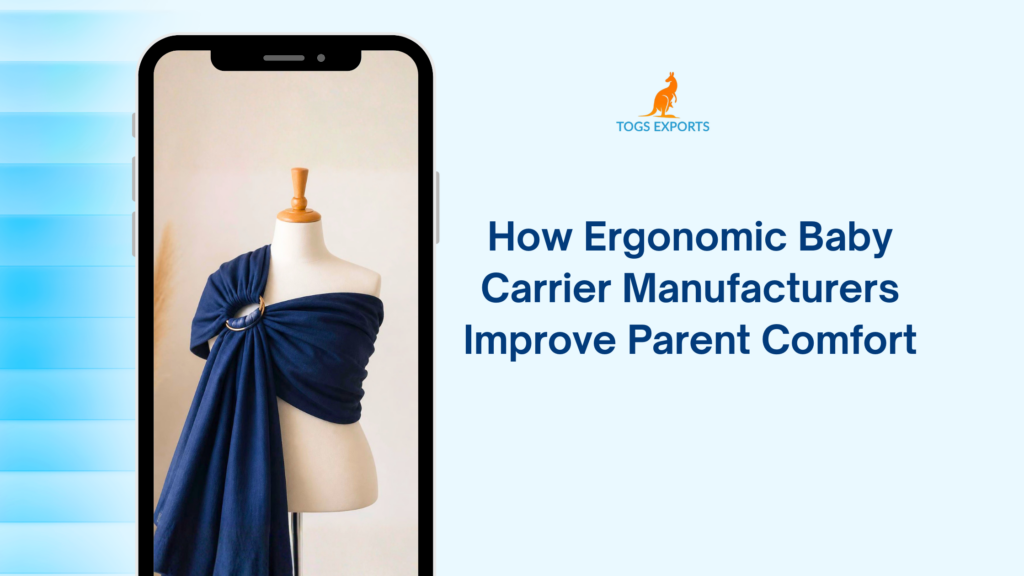
A baby carrier is only as good as the comfort it provides. Parents use sling carriers for long hours, often in close contact with their baby. This makes comfort a key factor in product selection. Retailers who understand this shift are paying more attention to how these carriers are made. Working with a Baby Sling Ring Carrier Manufacturer helps them ensure that comfort is not just a feature, but a result of careful manufacturing. Sling ring carriers may look simple, but their performance depends on fabric behavior, stitching, and adjustability. When these elements are aligned during production, the carrier feels natural and supportive in daily use. How Fabric Sling Carrier Manufacturing Affects Comfort Comfort in sling carriers begins with the fabric. The way the fabric stretches, supports weight, and allows airflow plays a major role in user experience. During Fabric Sling Carrier Manufacturing, material selection is handled with close attention. The fabric must be soft against the baby’s skin while still providing enough strength to carry weight securely. Inconsistent material quality can affect both comfort and durability. This is why a controlled approach to Fabric Sling Carrier Manufacturing is essential. At the same time, Ring Sling Carrier Production ensures that the fabric is cut and stitched in a way that maintains its natural flexibility. This balance allows the carrier to adapt to different carrying positions. Why Ring Sling Carrier Production Requires Precision Sling carriers rely on a simple yet effective structure. The rings and fabric must work together to create a secure hold. During Ring Sling Carrier Production, this relationship is carefully managed. The placement of rings and the way the fabric passes through them directly affect comfort. If alignment is not precise, the carrier may feel uneven or difficult to adjust. A well managed Ring Sling Carrier Production process ensures that the fabric glides smoothly while maintaining stability. In addition, consistent Fabric Sling Carrier Manufacturing supports this process by ensuring that the material behaves the same way across all units. This consistency improves the overall user experience. The Role of Adjustable Sling Carrier Process in Everyday Use One of the main advantages of sling carriers is their adjustability. Parents can quickly adjust the carrier to suit their body and the baby’s position. This flexibility depends on how the adjustment system is integrated during production. The Adjustable Sling Carrier Process focuses on making these adjustments smooth and reliable. The fabric must move easily through the rings while holding firmly under weight. If this balance is not achieved, comfort is affected. A controlled Ring Sling Carrier Production system ensures that adjustment points remain functional across all products. At the same time, Fabric Sling Carrier Manufacturing supports flexibility without weakening the structure. Why Comfort Depends on Manufacturing Consistency Retailers often notice that comfort varies between products from different suppliers. This difference usually comes from manufacturing consistency. When production systems are not controlled, small variations can affect how the carrier feels in use. Working with a Baby Sling Ring Carrier Manufacturer who follows disciplined processes helps avoid these issues. Consistency in Ring Sling Carrier Production, stability in the Adjustable Sling Carrier Process, and precision in Fabric Sling Carrier Manufacturing all contribute to reliable comfort. At Togs Exports, we focus on maintaining this balance in every stage of production. Our manufacturing approach ensures that each sling carrier offers the same level of comfort, flexibility, and support. If you are looking to work with a reliable Baby Sling Ring Carrier Manufacturer who understands the importance of comfort in everyday use, we would be glad to discuss your requirements. Phone: +91 99447 50075 Website: www.togsexports.com Frequently Asked Questions (FAQs): What makes sling ring carriers comfortable for daily use? Comfort comes from soft yet strong fabric, proper weight distribution, and smooth adjustability. Can sling carriers be adjusted easily? Yes, the design allows quick adjustments through the ring system when manufactured correctly. What type of fabric is used in sling carriers? High-quality woven fabrics are commonly used to provide both comfort and strength. How is quality maintained in sling carrier production? Quality is controlled through consistent material selection and structured production processes. Is customization available for sling carriers? Yes, fabric, design, and branding can be customized based on requirements. READ MORE:  From Stitching to Final Check in Baby Carrier Manufacturing Process Why Wholesale Baby Carrier Suppliers Important for Baby Brands Choosing the Best and Safest Baby Carrier: A Business Guide!!

How Baby Sling Ring Carrier Manufacturer Ensure Comfort Read More »

Why Baby Hip Seater Manufacturer Are in High Demand?

Why Baby Hip Seater Manufacturer Are in High Demand?

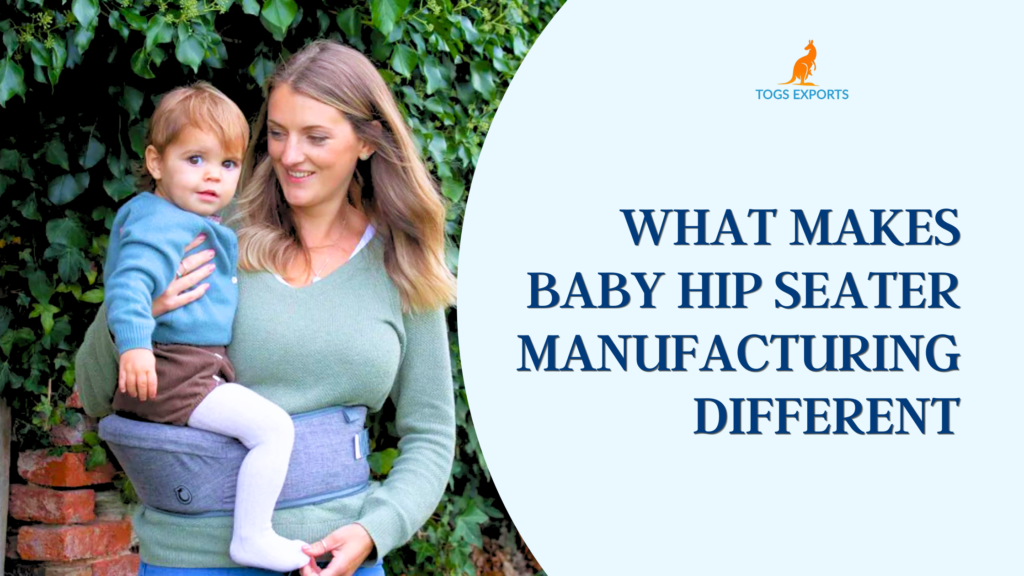
Retail shelves are changing faster than ever. Parents no longer want complicated carriers for every situation. They look for something quick, supportive, and easy to use during daily routines. This shift has pushed hip seat carriers into the spotlight. As demand grows, retailers are actively partnering with a Baby Hip Seater Manufacturer who understands how to build products that support real everyday use. Hip seat carriers solve a very specific problem. They reduce the strain of holding a baby on the hip for long periods. At the same time, they provide a structured base that supports the child’s weight. This combination makes them highly practical for modern parenting. How Hip Seat Carrier Production Meets Daily Use Needs A hip seat carrier must handle repeated lifting, shifting, and movement throughout the day. This makes the Hip Seat Carrier Production process critical. Manufacturers must focus on building a strong base that supports weight without losing shape. During Hip Seat Carrier Production, teams carefully shape the seat structure and reinforce load-bearing areas. The internal support must stay stable even after continuous use. If the structure weakens, the product loses its purpose. At the same time, consistent Ergonomic Hip Seat Manufacturing ensures that the carrier remains comfortable for both the baby and the caregiver. This balance between strength and usability drives demand in the retail market. Why Ergonomic Hip Seat Manufacturing Matters Comfort is not just about soft materials. It comes from how the product supports the body during use. In Ergonomic Hip Seat Manufacturing, the focus stays on weight distribution and body alignment. Manufacturers design the seat angle and waist support to reduce pressure on the caregiver’s back. This makes carrying feel more natural. Proper Ergonomic Hip Seat Manufacturing also supports the baby’s sitting position, which improves overall stability. Retailers who understand this process often choose products that deliver consistent comfort. This is one of the key reasons hip seat carriers continue to grow in popularity. The Role of Baby Hip Support Carrier Process in Product Reliability Every detail in a hip seat carrier affects performance. The Baby Hip Support Carrier Process ensures that each component works together as a complete system. Manufacturers integrate stitching, padding, and internal support carefully during the Baby Hip Support Carrier Process. Each element must handle weight without shifting or collapsing. This creates a stable carrying experience. A strong Hip Seat Carrier Production system supports this by maintaining the same structure across every batch. Combined with precise Ergonomic Hip Seat Manufacturing, it ensures that every product performs reliably in daily use. Why Retailers Are Expanding Hip Seat Carrier Offerings Retailers are responding to clear customer demand. Parents want carriers that offer quick usability without compromising support. Hip seat carriers meet this need effectively. Working with a Baby Hip Seater Manufacturer allows retailers to offer products that reflect this demand. Manufacturing expertise ensures that each carrier maintains the right balance of structure, comfort, and durability. At Togs Exports, we focus on delivering consistent quality through controlled Hip Seat Carrier Production, precise Ergonomic Hip Seat Manufacturing, and a reliable Baby Hip Support Carrier Process. Our approach supports retailers who want dependable products for everyday use. If you are planning to expand your range with hip seat carriers and want to work with a reliable Baby Hip Seater Manufacturer, we would be glad to discuss your requirements. Phone: +91 99447 50075 Website: www.togsexports.com Frequently Asked Questions (FAQs): Why are hip seat carriers becoming popular? They offer quick and comfortable carrying, especially for short trips and daily use. Are hip seat carriers suitable for long use? Yes, when designed properly, they reduce strain and provide stable support. Can hip seat carriers be customized? Yes, design, fabric, and branding can be adjusted based on requirements. How is durability ensured in hip seat carriers? Manufacturers use reinforced structures and controlled production processes. What is the typical production time? It depends on order size, but structured manufacturing helps maintain consistent timelines. READ MORE: Why Retailers Prefer Manufacturers with In House Quality Control? What Retailers Should Know About Export-Ready Baby Carrier Manufacturing!! Why Retailers Choose Manufacturers Who Take Responsibility Seriously?

Why Baby Hip Seater Manufacturer Are in High Demand? Read More »

How Baby Wrap Carrier Manufacturers Ensure Flexibility

How Baby Wrap Carrier Manufacturer Ensure Flexibility

Flexibility defines the experience of a baby wrap carrier. Parents expect a carrier that adapts to their body while supporting the baby securely. This balance does not happen by chance. It comes from how the product is developed and manufactured. Retailers who understand this difference often work closely with a Baby Wrap Carrier Manufacturer to ensure that flexibility remains consistent across every unit. Wrap carriers may look simple, yet they rely heavily on fabric behavior and construction methods. The way the material stretches, holds weight, and returns to shape determines how the carrier performs in daily use. How Stretch Wrap Carrier Production Supports Natural Movement Stretch is a key feature in wrap carriers. It allows the fabric to adapt to different carrying positions and body shapes. During Stretch Wrap Carrier Production, manufacturers control how much the fabric stretches and how it reacts under load. The material must stretch enough to provide comfort, yet remain firm enough to support the baby safely. In Stretch Wrap Carrier Production, teams test elasticity and recovery to maintain this balance. Too much stretch can reduce support, while too little can affect comfort. At the same time, Soft Fabric Carrier Production ensures that the material feels gentle against the skin. This combination of stretch and softness improves the overall carrying experience. Why Woven Wrap Manufacturing Process Matters Not all wrap carriers rely on stretch. Some use woven fabrics that provide flexibility through structure rather than elasticity. The Woven Wrap Manufacturing Process focuses on how threads are interlaced to create strength and adaptability. In this process, manufacturers control weave patterns to achieve the right balance between firmness and flexibility. A well managed Woven Wrap Manufacturing Process allows the fabric to mold around the baby while maintaining support. Meanwhile, Stretch Wrap Carrier Production and woven techniques often complement each other. Together, they provide options that suit different user preferences while maintaining consistent performance. The Role of Soft Fabric Carrier Production in Comfort Flexibility alone is not enough. The fabric must also feel comfortable during extended use. This is where Soft Fabric Carrier Production becomes important. Manufacturers select materials that combine smooth texture with durability. During Soft Fabric Carrier Production, finishing techniques ensure that the fabric remains breathable and gentle. This reduces irritation and improves usability. At the same time, Woven Wrap Manufacturing Process ensures that softness does not compromise strength. Combined with Stretch Wrap Carrier Production, it creates a carrier that adapts naturally without losing support. Why Flexibility Depends on Manufacturing Consistency Retailers often notice differences in flexibility between products from different suppliers. These variations usually come from inconsistent manufacturing practices. Working with a reliable Baby Wrap Carrier Manufacturer ensures that flexibility remains consistent across every batch. Controlled Stretch Wrap Carrier Production, precise Woven Wrap Manufacturing Process, and stable Soft Fabric Carrier Production all contribute to this consistency. At Togs Exports, we focus on maintaining this balance in every stage of production. Our manufacturing approach ensures that each wrap carrier delivers the same level of flexibility, comfort, and support. If you are looking to expand your product range with wrap carriers and want to work with a dependable Baby Wrap Carrier Manufacturer, we would be glad to discuss your requirements. Phone: +91 99447 50075 Website: www.togsexports.com Frequently Asked Questions (FAQs): What makes baby wrap carriers flexible? Flexibility comes from fabric stretch, weave structure, and how the material adapts to movement. Are wrap carriers comfortable for long use? Yes, when manufactured properly, they provide both flexibility and support for extended use. What fabrics are used in wrap carriers? Stretch and woven fabrics are commonly used, depending on the desired flexibility and support. Can wrap carriers be customized? Yes, fabric type, size, and branding can be customized based on requirements. How is quality maintained in wrap carrier production? Through controlled manufacturing processes and consistent material selection. READ MORE: What Retailers Should Know About Export-Ready Baby Carrier Manufacturing!! Manufacturing Is Not Assembly In Direct Baby Carrier Manufacturing From Stitching to Final Check in Baby Carrier Manufacturing Process

How Baby Wrap Carrier Manufacturer Ensure Flexibility Read More »

What Makes Toddler Sling Ring Carrier Manufacturing Different?

What Makes Toddler Sling Ring Carrier Manufacturing Different?

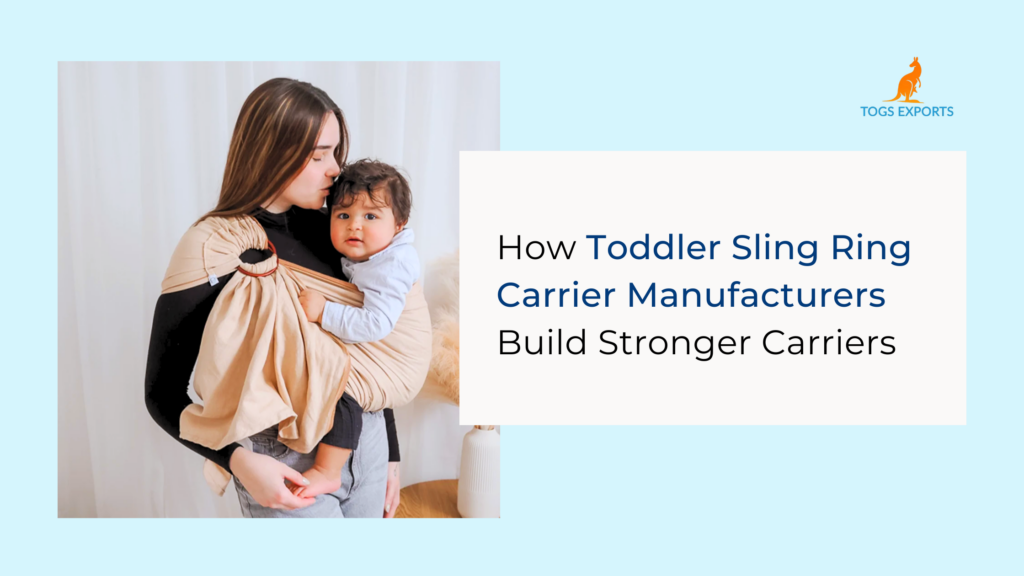
A toddler does not move like an infant. They shift, lean, and put more pressure on every part of the carrier. This changes how the product must be built from the ground up. Retailers who understand this difference look beyond appearance and focus on how the carrier performs under real conditions. That is why working with a Toddler Sling Ring Carrier Manufacturer becomes important when sourcing products for this age group. Toddler carriers require stronger construction and better weight handling. The design may look similar to infant sling carriers, but the manufacturing approach must adapt to higher load and repeated movement. Why Toddler Sling Carrier Production Requires Stronger Structure A toddler carrier must support more weight while maintaining comfort. This makes Toddler Sling Carrier Production more demanding than standard sling manufacturing. Every part of the carrier must handle continuous pressure without losing shape. During Toddler Sling Carrier Production, manufacturers reinforce stitching and adjust fabric strength to match the load. The carrier must remain stable even when the child moves frequently. This ensures that the product performs reliably in daily use. At the same time, Heavy Duty Sling Manufacturing supports this process by focusing on durability. Stronger materials and reinforced seams help maintain long term performance. How Heavy Duty Sling Manufacturing Supports Durability Durability becomes a key factor when producing toddler carriers. The product must handle higher stress while remaining comfortable for both the child and the caregiver. This is where Heavy Duty Sling Manufacturing plays a critical role. Manufacturers select fabrics that offer both strength and flexibility. During Heavy Duty Sling Manufacturing, stitching patterns are adjusted to prevent wear over time. This reduces the risk of failure under repeated use. In addition, Toddler Carrying System Production ensures that all components work together. The carrier must distribute weight evenly to avoid discomfort. This creates a more stable and secure carrying experience. The Role of Toddler Carrying System Production in Stability A toddler carrier must function as a complete system. Every part, from fabric to rings, must support the increased load. Toddler Carrying System Production focuses on maintaining this balance. Manufacturers design the carrier to handle shifting weight and movement. During Toddler Carrying System Production, alignment and reinforcement are carefully controlled. This helps maintain stability even during active use. Meanwhile, Toddler Sling Carrier Production ensures that each unit follows the same structure. Combined with Heavy Duty Sling Manufacturing, this creates a product that performs consistently. Why Retailers Choose Specialized Manufacturing for Toddler Carriers Retailers often notice that not all sling carriers perform well for toddlers. Products designed for infants may not provide the same level of support. This difference leads retailers to choose a Toddler Sling Ring Carrier Manufacturer with experience in handling higher load requirements. Specialized manufacturing ensures that the carrier meets both comfort and durability expectations. Consistent Toddler Sling Carrier Production, supported by Heavy Duty Sling Manufacturing, helps maintain quality across every batch. At Togs Exports, we focus on building carriers that support real usage conditions. Our approach combines reliable Toddler Sling Carrier Production, durable Heavy Duty Sling Manufacturing, and a balanced Toddler Carrying System Production process. If you are planning to add toddler sling carriers to your product range and want to work with a reliable Toddler Sling Ring Carrier Manufacturer, we would be glad to discuss your requirements. Phone: +91 99447 50075 Website: www.togsexports.com Frequently Asked Questions (FAQs): Why are toddler sling carriers different from infant carriers? They are designed to support higher weight and more movement, requiring stronger structure and materials. What materials are used for toddler sling carriers? Durable woven fabrics with reinforced stitching are commonly used for strength and flexibility. Can toddler sling carriers be customized? Yes, design, fabric, and branding can be adjusted based on requirements. How is durability ensured in toddler carriers? Through heavy-duty materials, reinforced stitching, and controlled production processes. What is the ideal age range for toddler carriers? They are typically designed for older babies and toddlers who require more support. READ MORE:  How Consistent Baby Carrier Manufacturing Protects Brand Reputation? How to Choose the Right Baby Carrier Manufacturer for Your Brand Top Qualities Every Retailer Wholesale Baby Carriers Suppliers

What Makes Toddler Sling Ring Carrier Manufacturing Different? Read More »

Buckle Baby Carrier Manufacturer

What Retailers Should Know Before Sourcing Baby Buckle Carriers From Manufacturer

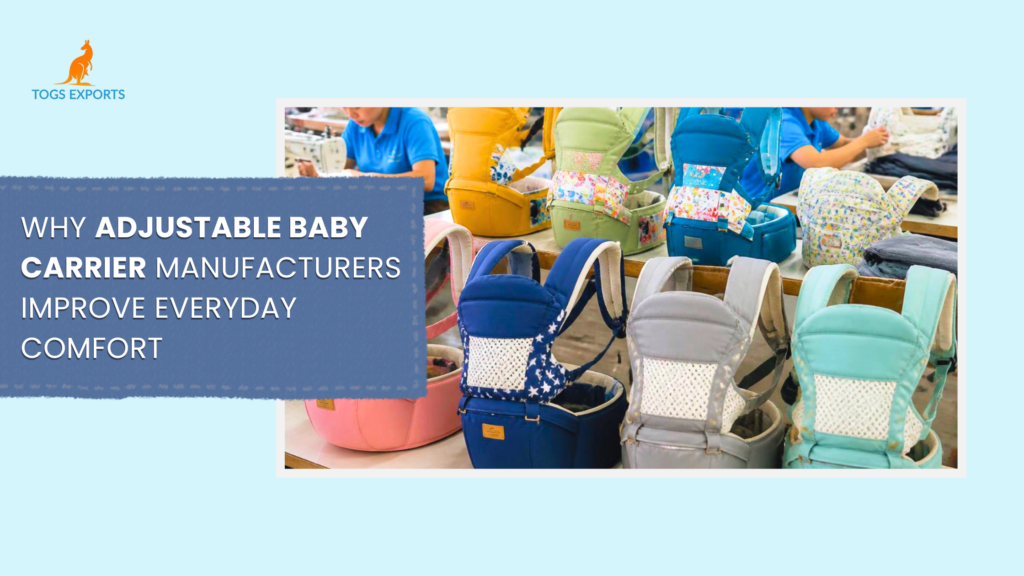
Retailers often focus on appearance when choosing baby carriers. However, long-term product success rarely depends on design alone. The real difference lies in how the carrier is built and how consistently it is produced. When retailers work with a Buckle Baby Carrier Manufacturer, they begin to see the importance of production systems that support both safety and durability. A buckle carrier carries weight differently from soft wraps or sling styles. The structure must support the baby while distributing weight across the caregiver’s body. Because of this, sourcing decisions should consider how the product is manufactured, not just how it looks on display. Why Retailers Should Work With a Buckle Baby Carrier Manufacturer A buckle carrier requires precision in structure and assembly. Unlike simpler carrier styles, these products rely on reinforced stitching, durable hardware, and carefully balanced panel construction. A reliable Buckle Baby Carrier Manufacturer understands these technical requirements and integrates them into every production cycle. In a professional facility, Structured Baby Carrier Production ensures that each carrier maintains the same stability and strength. Every panel must align properly. Reinforcement points must support the load created during everyday carrying. When manufacturing follows clear production standards, retailers receive products that remain dependable over time. How Ergonomic Buckle Carrier Production Supports Comfort Parents expect buckle carriers to feel comfortable during extended use. Comfort does not happen by chance. It develops through careful design supported by disciplined manufacturing methods. Ergonomic Buckle Carrier Production focuses on maintaining the correct shape and support structure throughout the carrier. Inside a well organised facility, Ergonomic Buckle Carrier Production ensures that padding placement, shoulder strap structure, and back panel shape remain consistent. These elements work together to distribute weight evenly. As a result, both the child and the caregiver experience better support during daily use. Retailers who understand the role of Ergonomic Buckle Carrier Production often recognise why manufacturing expertise matters when selecting suppliers. Why Adjustable Baby Carrier Manufacturing Matters Buckle carriers are designed to grow with the child. This flexibility depends on well constructed adjustment systems. Straps, buckles, and support panels must move smoothly without weakening the structure of the carrier. During Adjustable Baby Carrier Manufacturing, production teams carefully integrate hardware components with fabric structures. The adjustment system must remain durable even after repeated use. Proper alignment during Adjustable Baby Carrier Manufacturing ensures that straps tighten securely while maintaining comfort. When retailers evaluate carriers, they often notice how reliable Adjustable Baby Carrier Manufacturing improves long term product performance. The Importance of Consistency in Structured Baby Carrier Production Consistency is essential in baby product manufacturing. Retailers need confidence that every shipment will meet the same quality standards. This stability depends on disciplined Structured Baby Carrier Production. In a controlled production environment, Structured Baby Carrier Production follows the same technical specifications across every batch. Stitching density, panel alignment, and hardware placement remain consistent. This reduces variation and ensures that each carrier performs as expected. Reliable manufacturing systems allow retailers to build customer trust. When a product performs well consistently, parents are more likely to return to the same brand. Manufacturing Knowledge Supports Better Retail Decisions Retailers today are becoming more aware of how manufacturing quality affects product reliability. Working directly with an experienced Buckle Baby Carrier Manufacturer helps retailers understand how structure, ergonomics, and adjustability work together in a single product. At Togs Exports, our team focuses on disciplined Ergonomic Buckle Carrier Production, precise Adjustable Baby Carrier Manufacturing, and dependable Structured Baby Carrier Production. These systems ensure that each carrier leaving our facility reflects the same level of stability and comfort. If you are exploring buckle carriers for your product range and want to work directly with a Buckle Baby Carrier Manufacturer, we would be glad to discuss your requirements. Phone: +91 99447 50075Website: www.togsexports.com

What Retailers Should Know Before Sourcing Baby Buckle Carriers From Manufacturer Read More »

Why Retailers Choose a Baby Carrier Production Company

Why Retailers Choose a Baby Carrier Production Company?

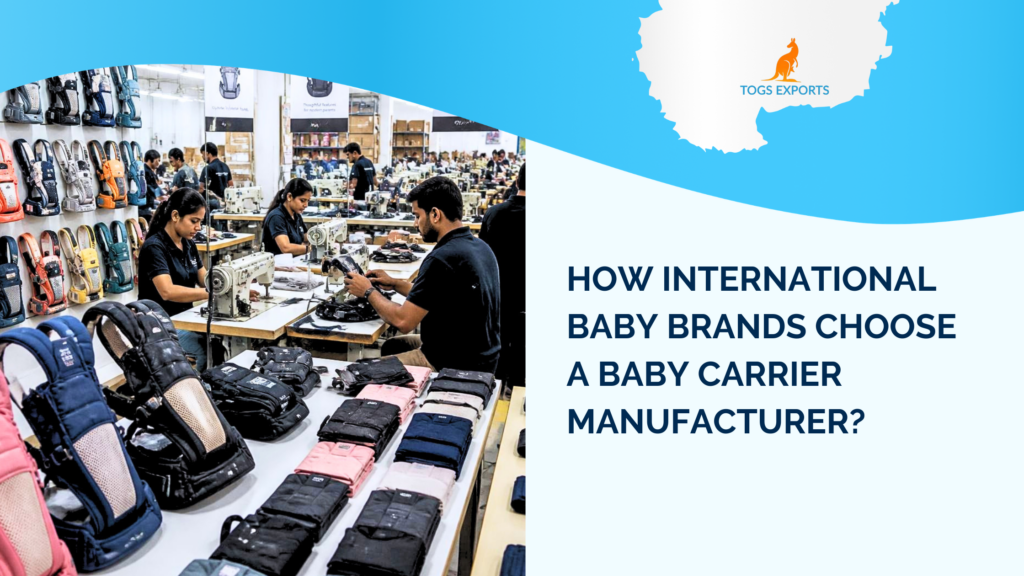
The baby products industry is gradually changing the way retailers source their products. For many years, trading-based supply chains were common. Retailers would purchase products through multiple layers before they reached the store. However, this approach often created uncertainty around quality, timelines, and product consistency. Because of this, more retailers are now choosing to work directly with a Baby Carrier Production Company that manages the manufacturing process internally. This change reflects a deeper understanding of how products are made. Retailers today want greater clarity about production standards and material quality. When they collaborate with a Baby Carrier Production Company, they gain direct access to the manufacturing environment. This visibility helps them build stronger confidence in the products they sell. Why Retailers Prefer Working With a Baby Carrier Production Company Retailers today focus heavily on reliability. Parents expect baby products to be safe, durable, and consistent every time they purchase them. If quality varies from one shipment to another, retailers risk losing customer trust. A structured Infant Carrier Manufacturing Unit helps maintain stable production standards. Each stage of manufacturing follows defined technical procedures. Fabric panels are measured carefully. Stitching reinforcement supports load-bearing areas. Hardware placement follows precise alignment. When retailers collaborate with a Baby Carrier Production Company, they gain a better understanding of these production systems. Direct communication with the factory team allows them to ensure that product quality remains stable across every order. Consistent Production Improves Product Reliability Consistency plays a major role in successful retail partnerships. Retailers must be confident that every reorder will match the quality of the previous shipment. Facilities specialising in Custom Baby Carrier Production maintain clear technical specifications for each product design. The same stitching patterns, fabric structures, and reinforcement methods are used in every production cycle. Within an organised Infant Carrier Manufacturing Unit, production teams follow controlled procedures that reduce variation. This structured environment allows a Baby Carrier Production Company to maintain predictable output. Retailers who partner with specialists in Custom Baby Carrier Production often experience fewer product issues and greater long-term reliability. Manufacturing Transparency Strengthens Retail Confidence Retailers increasingly value transparency in the manufacturing process. They want to know how materials are selected, how products are assembled, and how quality is verified before shipment. Working directly with a Baby Carrier Production Company allows retailers to understand the Baby Carrier Production Process in greater detail. This transparency builds trust between manufacturing teams and retail partners. Inside a disciplined Infant Carrier Manufacturing Unit, inspection takes place throughout the production cycle. Stitching strength, seam alignment, and structural stability are evaluated during assembly. Manufacturers experienced in Custom Baby Carrier Production often share these insights with retailers. This open communication strengthens collaboration and supports long-term product development. Why Direct Manufacturing Partnerships Are Growing Retailers today operate in a market where customer expectations are high. Parents rely on baby carriers that must perform safely during daily use. When quality becomes inconsistent, customer confidence can quickly decline. This is why many brands now prefer working with a Baby Carrier Production Company rather than relying on traditional supply chains. Direct manufacturing partnerships allow retailers to maintain stronger control over product standards and production timelines. A well-organised Infant Carrier Manufacturing Unit supports this reliability through structured production systems. Meanwhile, expertise in Custom Baby Carrier Production allows retailers to introduce distinctive designs while maintaining stable construction. As manufacturers, we believe strong retail partnerships begin with transparent production systems. Our teams focus on maintaining a reliable Baby Carrier Production Process that supports consistent quality and dependable supply. If you are exploring a stable manufacturing partnership and want to collaborate with a Baby Carrier Production Company, we would be glad to discuss your requirements. Contact us at +91 99447 50075 or visit www.togsexports.com to learn more about our manufacturing capabilities.

Why Retailers Choose a Baby Carrier Production Company? Read More »