
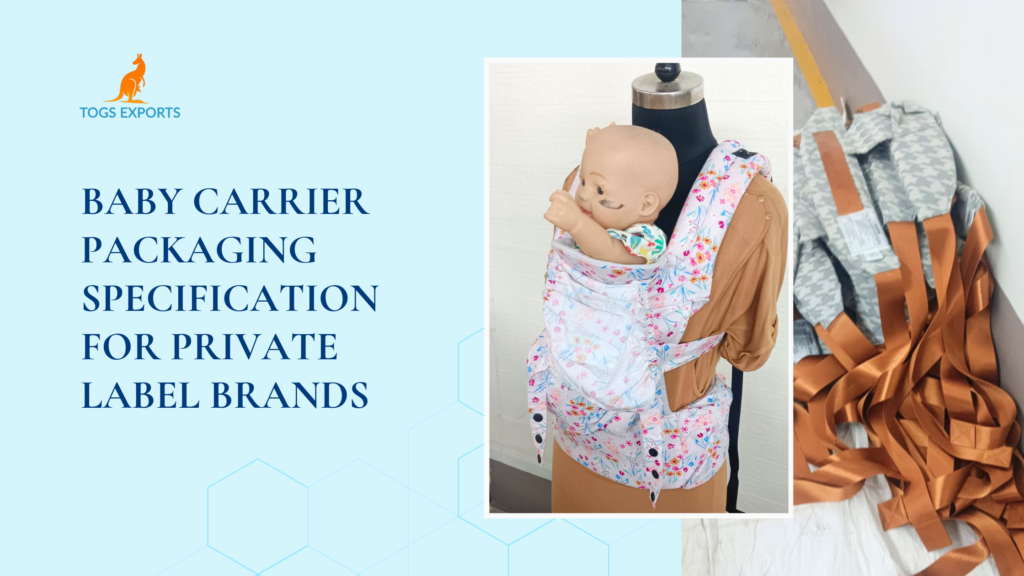
Packaging is an important part of private-label baby carrier development. It protects the product during handling and shipping, communicates essential product information, and helps brands maintain consistency across retail markets. Baby carrier packaging specification should therefore be finalised alongside product design and manufacturing requirements, rather than treated as a last-minute task before dispatch.
For OEM buyers, packaging decisions involve more than selecting a box or printing a logo. Brands need to define packaging dimensions, materials, product presentation, labelling, packing instructions, and export requirements before approving bulk production.
As part of baby carrier manufacturing, clear packaging specifications help connect the approved product with the brand’s presentation and distribution requirements.
Why Baby Carrier Packaging Specification Matter
Private-label brands often sell the same product through different channels, including retail stores, e-commerce platforms, distributors, and international importers. Each channel may have different packaging needs.
A well-defined packaging specification helps manufacturers and brand owners coordinate these requirements before production begins.
Product protection during handling
Baby carriers may include fabric panels, straps, buckles, padding, and other components. Packaging should protect these parts from dirt, moisture exposure, abrasion, and unnecessary compression during storage and transportation.
The appropriate protection depends on the product construction, shipping conditions, and distribution process. Packaging should be evaluated for its intended use rather than selected on appearance alone.
Consistent brand presentation
Private-label packaging often includes brand logos, product names, colours, product images, and other approved visual elements. A controlled specification helps maintain consistency between samples and bulk orders.
Clear product information
Packaging may need to communicate product details, care instructions, warnings, manufacturer information, and other information required by the destination market or sales channel.
The exact requirements depend on the product, market, and applicable regulations. Brands should confirm these requirements before approving artwork.
Efficient packing and distribution
Packaging dimensions and folding instructions influence carton planning, warehouse handling, and shipping efficiency. Standardised packing instructions help reduce unnecessary variation between packed units.
Core Elements of Baby Carrier Packaging Specification
A complete specification should identify the packaging components, materials, dimensions, artwork, and packing method required for the finished product.
| Specification area | Details to confirm |
|---|---|
| Primary packaging | Polybag, fabric pouch, box, or another approved format |
| Packaging dimensions | Length, width, depth, and any dimensional tolerances |
| Material selection | Paperboard, corrugated material, protective film, or other specified materials |
| Brand artwork | Logo, colours, typography, product name, and approved images |
| Product information | Model, size or age range where applicable, care details, and instructions |
| Labels and codes | SKU, barcode, batch reference, or other required identifiers |
| Packing method | Folding sequence, strap arrangement, inserts, and accessory placement |
| Carton configuration | Units per carton, carton dimensions, and shipping marks |
| Approval records | Artwork version, packaging sample approval, and revision history |
Not every product requires every element. The specification should reflect the brand’s requirements and the intended distribution channel.
Selecting the Right Packaging Format
The packaging format should suit the carrier design, target customer, and distribution method.
Retail box packaging
Retail boxes can provide a defined presentation area for branding, product imagery, and product information. They may suit products sold through physical retail stores or channels that require a structured shelf presentation.
The box size should accommodate the folded carrier and any included accessories without excessive empty space or unnecessary compression.
Fabric storage pouches
A fabric pouch can keep the carrier and accessories together and may support a reusable storage experience. Brands should define the pouch material, dimensions, closure method, logo placement, and folding arrangement.
If the pouch is included inside another package, both the pouch and outer packaging should be considered during product development.
Protective bags and inner packaging
Protective bags or other inner packaging can help keep the product clean during handling and storage. The chosen material should be appropriate for the intended use and meet any applicable requirements.
Packaging design should also account for relevant warnings or restrictions, particularly where packaging could create a suffocation hazard for young children. Brands should confirm applicable requirements for their target markets.
E-commerce packaging
Products shipped directly to customers may need packaging that withstands parcel handling and repeated movement through distribution networks.
Depending on the sales model, brands may use a retail package inside a separate shipping carton or a combined packaging format. The final configuration should balance product protection, presentation, dimensions, and shipping costs.
Packaging Dimensions and Product Folding
Packaging dimensions should be developed around the actual finished product and the approved folding method.
An oversized package may increase material use and shipping volume. An undersized package may cause difficult packing, excessive compression, or distortion of product components.
During development, brands and manufacturers should confirm:
- The approved folding sequence for the carrier.
- The position of straps, buckles, and accessories.
- The dimensions of the packed product.
- The available space for instructions and inserts.
- The internal dimensions required for the selected package.
- The fit of the packed product within the outer carton.
The packaging sample should be tested with the actual carrier configuration. Measurements taken from an unfolded product alone are not enough to finalise package dimensions.
Packaging Materials and Protection Requirements
Packaging materials should be selected according to the product, expected handling conditions, storage environment, and distribution route.
Paperboard and corrugated packaging
Paperboard may suit retail presentation, while corrugated cartons can provide additional structure for transport and bulk packing. The appropriate grade and construction depend on package weight, stacking requirements, handling conditions, and shipping configuration.
Protective films and bags
Protective films or bags may help keep products clean during storage and handling. Material selection should consider the product’s needs, relevant packaging requirements, and the brand’s environmental objectives.
Inserts and printed materials
Instruction booklets, product cards, or other inserts should fit the package without interfering with the carrier or its components. The specification should include the approved dimensions, content, language versions, and placement.
Moisture and transit considerations
International shipments may pass through changing environmental conditions and multiple handling stages. Brands should consider suitable storage and transport protection for the materials involved.
Packaging should be reviewed as part of the complete shipping configuration, especially where cartons may be stacked or exposed to prolonged transit.
Labelling and Artwork Approval for Private Label Brands
Packaging artwork needs a controlled approval process because changes to product information or design can affect production schedules and compliance.
Before printing, brands should verify the following elements.
Brand identity: Confirm the logo, colours, typography, and product naming against the approved artwork.
Product details: Check model references, size or fit information where applicable, and descriptions against the final product specification.
Instructions and warnings: Ensure the content matches the product and has been reviewed for the intended market.
Barcode and SKU: Confirm that identifiers are correct and readable where required.
Language requirements: Verify that the packaging includes the necessary languages for its destination markets.
Artwork version: Record the approved version so the manufacturer and packaging supplier use the same file.
Claims about product performance, materials, certifications, or safety should only appear when they are accurate and properly substantiated. Packaging should not imply that a product has an approval or certification it does not hold.
Export Packaging Requirements for Baby Carriers
For international orders, packaging must meet the practical needs of transport and the requirements applicable to the destination market.
The exact requirements depend on the product, materials, route, importer, and shipping arrangement. OEM buyers should confirm the following before production:
- Required product and importer information.
- Applicable labelling and warning requirements.
- Carton markings and shipment identification.
- Packaging dimensions and agreed units per carton.
- Any customer-specific packing instructions.
- Requirements relating to packaging materials or restricted substances, where applicable.
- Shipping documentation and identification requirements agreed with the importer.
Export carton markings should be checked against the purchase order and shipping instructions. If different customers or destinations require different labels, the packing specification should clearly identify each configuration.
Packaging Quality Checks Before Dispatch
Packaging quality checks help confirm that the packed product matches the approved specification.
A practical inspection may include:
- Artwork verification: Check the printed design against the approved file.
- Dimension checks: Measure the package and carton against the specified dimensions.
- Packing verification: Confirm that the carrier is folded and positioned correctly.
- Product information checks: Verify labels, inserts, SKU references, and other required details.
- Quantity verification: Confirm the number of units packed in each carton.
- Carton condition: Inspect for visible damage, unsuitable closure, or other packing defects.
- Record keeping: Document inspection results and resolve discrepancies before dispatch.
Additional transit or packaging performance tests may be appropriate depending on the product, packaging design, and distribution conditions.
Common Packaging Mistakes in Private Label Production
Several packaging issues can create avoidable costs or delays.
Finalising packaging before the product sample
If the carrier’s dimensions or folding arrangement change after packaging approval, the existing package may no longer fit correctly. Confirm the product configuration before locking the packaging dimensions.
Using unapproved artwork
Old logos, incorrect product details, or outdated instructions can lead to inconsistent packaging. Version control and written approval help prevent these errors.
Ignoring the shipping carton
Retail packaging may fit the product perfectly but create inefficient carton dimensions when packed in bulk. Brands should review individual packaging and export cartons together.
Overlooking destination-market requirements
A package designed for one market may not include all the information required in another. Confirm applicable requirements for each intended destination before printing.
Failing to approve a physical packaging sample
Artwork approval alone does not confirm that the package fits the carrier or protects it adequately. A physical sample allows the team to assess fit, folding, presentation, and practical handling.
Baby Carrier Packaging Approval Checklist
Before authorising bulk packaging, private-label brands can use this checklist:
-
Final product sample and folding method approved.
-
Packaging format and materials confirmed.
-
Package dimensions checked using the packed product.
-
Logo, colours, product information, and artwork approved.
-
Instructions and warnings reviewed for the target market.
-
Barcode, SKU, and other identifiers verified where required.
-
Units per carton and carton dimensions confirmed.
-
Export marks and customer-specific instructions checked.
-
Physical packaging sample reviewed.
-
Approved files and revisions documented.
This checklist gives brands and manufacturing partners a shared reference before packaging moves into bulk production.
Packaging as Part of the Baby Carrier Manufacturing Process
Packaging decisions influence product presentation, material usage, shipment planning, and the final handover to distributors or retailers. Treating packaging as part of the development process helps brands coordinate product specifications and packing requirements earlier.
Togs Exports works with brands on OEM, ODM, and private-label baby carrier development. By discussing packaging requirements alongside product design, sampling, and manufacturing specifications, brands can establish a clearer process for preparing products for their intended markets.
Frequently Asked Questions
1. What should baby carrier packaging specification include?
Baby carrier packaging specification should define the packaging format, materials, dimensions, artwork, product information, packing method, carton configuration, and relevant approval requirements.
2. Which packaging format is suitable for private-label baby carriers?
The right format depends on the product, brand positioning, sales channel, shipping conditions, and budget. Options may include retail boxes, fabric pouches, protective bags, and outer shipping cartons.
3. Should packaging be approved before bulk production?
Yes. Brands should approve the artwork and review a physical packaging sample before bulk production. This helps verify product fit, printed details, packing instructions, and package dimensions.
4. What should brands consider for export packaging for baby carriers?
Brands should review product protection, carton dimensions, shipment markings, customer-specific packing instructions, and applicable destination-market requirements. The exact requirements depend on the shipment and market.
5. How can brands reduce packaging costs without compromising quality?
Brands can review package dimensions, avoid unnecessary empty space, optimise carton configuration, and select materials appropriate for the product and shipping conditions. Any change should be checked against protection, presentation, and applicable requirements.
Develop Your Private Label Baby Carrier With Togs Exports
Clear packaging requirements help connect your product design with its final presentation and shipping configuration. Togs Exports supports OEM, ODM, and private-label baby carrier development for brands seeking a manufacturing partner in India.
Phone: +91 99447 50075
Website: www.togsexports.com