
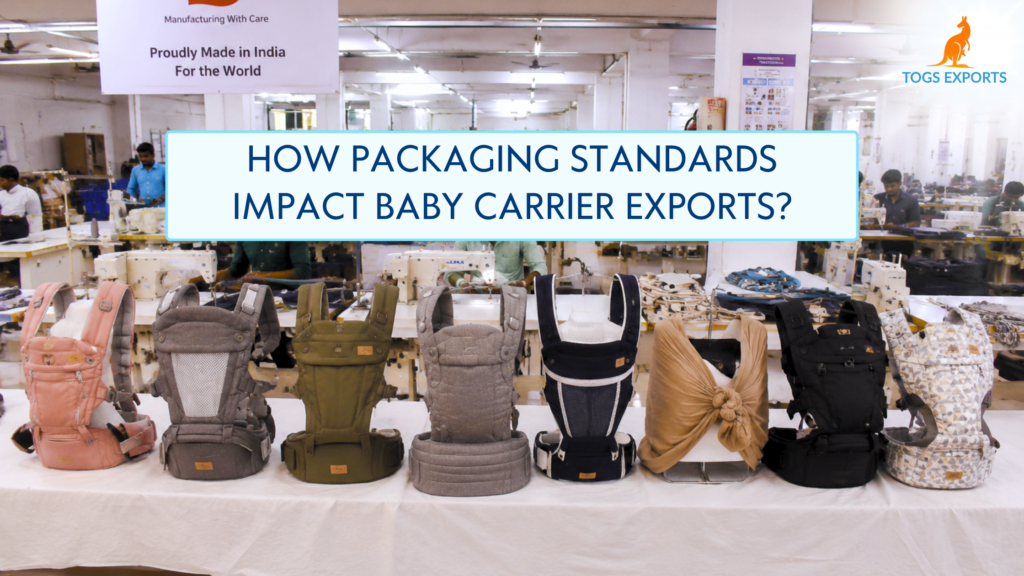
Packaging plays a larger role in manufacturing than many retailers initially expect. It does more than protect the product during shipping. Proper packaging supports labeling accuracy, organized handling, and smoother export operations. In baby carrier manufacturing, packaging standards directly affect how products move from production units to international markets. This is why Baby Carrier Export Packaging has become an important part of the manufacturing workflow.
Retailers today expect products to arrive in consistent condition with proper labeling and organized presentation. A structured packaging system helps manufacturers maintain this consistency throughout shipping and handling. At Togs Exports, we treat packaging as part of the manufacturing process rather than a final afterthought.
Why Export Ready Carrier Packaging Improves Product Protection
Products move through multiple handling stages before reaching retailers. During this process, packaging becomes the first layer of protection. Export Ready Carrier Packaging focuses on maintaining product condition during storage, transportation, and international shipment handling.
Manufacturers evaluate carton strength, folding methods, and packing organization to reduce unnecessary movement during shipping. Through Export Ready Carrier Packaging, products remain more stable throughout long-distance transport.
This process also helps improve shipment organization during loading and unloading. Better packaging structure reduces the risk of damage while maintaining cleaner product presentation for retailers.
How Baby Carrier Labeling Process Supports Export Accuracy
Packaging standards also include accurate labeling systems. The Baby Carrier Labeling Process helps manufacturers organize products clearly before shipment begins.
Manufacturers verify product information, carton details, barcode placement, and batch identification during this stage. A controlled Baby Carrier Labeling Process improves shipment tracking and inventory organization for retailers.
Proper labeling also reduces confusion during customs handling and warehouse management. Clear product identification supports smoother logistics throughout the export process.
Why International Packaging Standards Matter in Manufacturing
Different export markets often require structured packaging systems to maintain shipping consistency. International Packaging Standards help manufacturers prepare products for different transportation and storage conditions.
This includes carton durability, organized packing methods, moisture protection, and shipping documentation support. During production planning, manufacturers integrate International Packaging Standards directly into the workflow to maintain export readiness.
Retailers benefit because products arrive with better packaging consistency and improved shipment organization. This reduces handling issues during international distribution.
How Baby Carrier Export Packaging Supports Manufacturing Workflow
Packaging works most effectively when it is integrated into the manufacturing system itself. A stable Baby Carrier Export Packaging process allows manufacturers to align production, labeling, packing, and shipment preparation under one workflow.
At Togs Exports, we combine structured Export Ready Carrier Packaging, controlled Baby Carrier Labeling Process, and organized International Packaging Standards to support smoother export operations. Each stage focuses on maintaining consistency during shipment preparation.
This approach helps us reduce packaging-related disruptions while improving shipment clarity for retailers. It also supports better coordination between production teams and export departments.
Why Retailers Value Structured Export Packaging Systems
Retailers expect products to arrive in stable condition with accurate labeling and organized packaging. Structured packaging systems help manufacturers meet these expectations more consistently.
Working with manufacturers that follow organized Baby Carrier Export Packaging systems gives retailers greater confidence in international sourcing. It also improves warehouse handling and inventory management after shipment arrival.
At Togs Exports, we focus on maintaining export packaging systems that support manufacturing consistency and organized shipment preparation. Our approach helps retailers receive products with better packaging clarity and production alignment.
If you are planning to source baby carriers for international markets and need manufacturing support with export-ready packaging systems, we would be glad to discuss your requirements.
Phone: +91 99447 50075
Website: www.togsexports.com
FAQ
1. What is baby carrier export packaging?
Baby Carrier Export Packaging refers to structured packaging systems designed to protect products during international shipment.
2. Why is export-ready packaging important?
Export Ready Carrier Packaging helps reduce product damage and improve shipment organization during transportation.
3. What is included in the baby carrier labeling process?
The Baby Carrier Labeling Process includes barcode placement, product identification, carton labeling, and shipment tracking details.
4. Why do international packaging standards matter?
International Packaging Standards help manufacturers prepare products for different shipping and handling conditions.
5. How does structured packaging support retailers?
Organized packaging improves inventory handling, shipment clarity, and product protection during export operations.
READ MORE: