
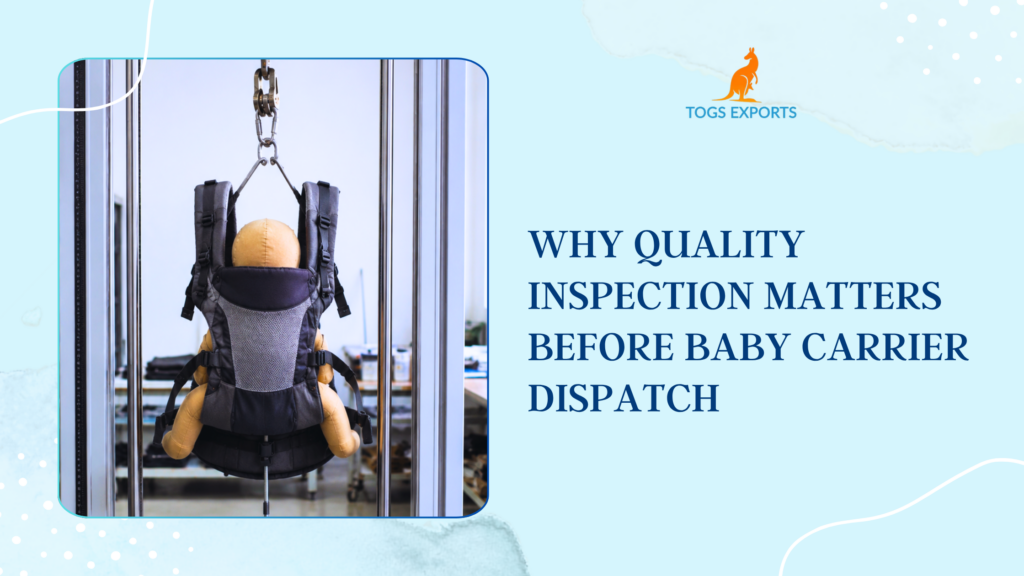
Every baby carrier that leaves a manufacturing unit represents the retailer’s brand as much as the manufacturer’s workmanship. Even a well-designed product can create problems if small defects go unnoticed before shipping. This is why Baby Carrier Quality Inspection is an essential part of the manufacturing process. A structured inspection system helps manufacturers identify issues before products are packed and dispatched, ensuring retailers receive products that meet consistent quality standards.
Quality inspection is much more than a final visual check. It is a controlled verification process that confirms every carrier has been manufactured according to approved specifications. At Togs Exports, inspection is integrated into our production workflow to ensure every shipment reflects the same level of quality and consistency.
How Final Product Inspection Process Prevents Manufacturing Errors
Production involves several stages, and even with controlled workflows, minor variations can occur. A structured Final Product Inspection Process helps identify these variations before products reach retailers. Every carrier is checked against approved production standards to ensure it matches the original specifications.
During the Final Product Inspection Process, inspectors review stitching quality, fabric appearance, measurements, hardware placement, and overall finishing. Each product is evaluated carefully to confirm that it is ready for shipment. This approach reduces the possibility of defective products entering the final packing stage.
Early detection of manufacturing issues also helps improve production efficiency. When inspection findings are shared with production teams, they can make adjustments that improve future manufacturing batches.
Why Baby Carrier Quality Checking Builds Retailer Confidence
Retailers depend on consistent products because their customers expect the same quality with every purchase. Baby Carrier Quality Checking helps maintain that consistency by verifying every carrier before dispatch.
Inspection teams examine functional areas such as buckle attachment, strap reinforcement, seam alignment, and fabric finishing. Through detailed Baby Carrier Quality Checking, manufacturers can confirm that every product meets the required manufacturing standards.
Consistent inspection also reduces the chances of customer complaints and product returns. Retailers gain greater confidence because each shipment follows the same quality verification process before leaving the factory.
How Pre Shipment Inspection Manufacturing Supports Smooth Deliveries
Inspection should be completed before products are packed for export. Pre Shipment Inspection Manufacturing ensures that products are verified before cartons are sealed and shipment documentation is completed.
During Pre Shipment Inspection Manufacturing, manufacturers review packaging accuracy, labeling, quantity verification, and product presentation. This stage helps ensure that shipments are complete and ready for international transportation.
A structured inspection before dispatch also reduces delays caused by last-minute corrections. Products move through packing and shipping more efficiently because quality has already been verified.
How Baby Carrier Quality Inspection Improves Production Standards
A reliable Baby Carrier Quality Inspection system does more than identify defects. It provides valuable feedback that helps manufacturers strengthen their production processes. Inspection results highlight recurring issues, allowing production teams to improve workflow and maintain higher standards.
At Togs Exports, we combine a detailed Final Product Inspection Process, consistent Baby Carrier Quality Checking, and organised Pre Shipment Inspection Manufacturing to maintain stable production quality. Each inspection stage supports continuous improvement while protecting product consistency.
By integrating inspection into the manufacturing workflow, we ensure that every shipment reflects the same production standards. This helps retailers receive products that match approved samples and meet customer expectations.
Why Retailers Prefer Manufacturers With Strong Inspection Systems
Retailers value manufacturing partners who focus on consistency rather than correction after shipment. A structured Baby Carrier Quality Inspection process helps reduce product issues before they reach the market, protecting both retailer reputation and customer satisfaction.
Working with a manufacturer that follows organised inspection procedures also creates greater transparency throughout the production process. Retailers know that every shipment has passed through multiple quality verification stages before dispatch.
At Togs Exports, quality inspection is an important part of how we manufacture baby carriers. We believe that careful inspection, combined with disciplined production systems, helps build long-term partnerships based on consistency and trust.
If you are looking for a manufacturing partner with a structured inspection process and dependable production standards, we would be glad to discuss your requirements.
Phone: +91 99447 50075
Website: www.togsexports.com
FAQ
1. What is baby carrier quality inspection?
Baby Carrier Quality Inspection is the process of verifying that every carrier meets approved manufacturing and quality standards before dispatch.
2. Why is final product inspection important?
The Final Product Inspection Process helps identify defects before products are packed and shipped, reducing quality issues.
3. What is checked during baby carrier quality checking?
Baby Carrier Quality Checking includes inspecting stitching, measurements, hardware, fabric quality, finishing, and overall workmanship.
4. What is pre shipment inspection in manufacturing?
Pre Shipment Inspection Manufacturing verifies products, packaging, labels, and shipment accuracy before export.
5. How does quality inspection benefit retailers?
A structured inspection process improves product consistency, reduces returns, and helps retailers maintain customer trust.