
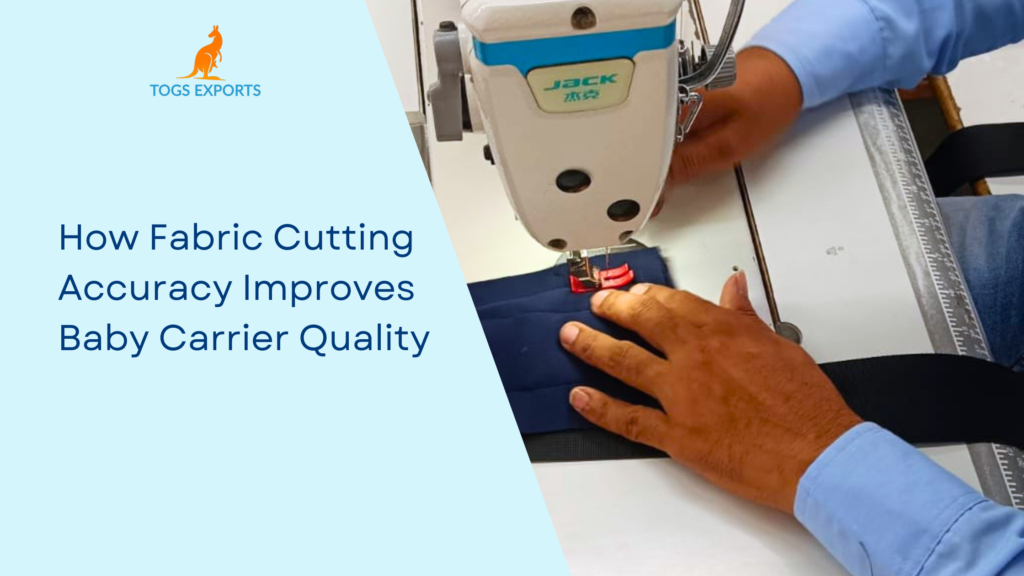
Choosing the right fabric is only the beginning of manufacturing a reliable baby carrier. The next stage, fabric cutting, has a direct impact on how every component fits together during production. Even a small variation in cutting can affect stitching, panel alignment, and the overall performance of the finished product. That is why Baby Carrier Fabric Cutting is one of the most important steps in our manufacturing workflow.
Retailers often evaluate a finished product based on its appearance and durability. However, both depend on how accurately each fabric piece is prepared before stitching begins. At Togs Exports, we follow a controlled cutting process that helps maintain production consistency while reducing material variation across every batch.
Why Precision Fabric Cutting Process Matters
Every baby carrier is made from multiple fabric panels that must fit together accurately. A Precision Fabric Cutting Process ensures that every panel follows the approved dimensions before it moves to the stitching department. This creates better alignment throughout production.
Accurate cutting also reduces unnecessary fabric waste and improves production efficiency. During our Precision Fabric Cutting Process, every pattern is checked before bulk cutting begins. This allows us to maintain uniformity across all production batches while supporting smooth assembly.
Consistent cutting gives stitching teams properly prepared components. As a result, seams remain cleaner, reinforcement points align correctly, and the finished carrier maintains its intended shape.
How Baby Carrier Pattern Cutting Supports Product Accuracy
Every design starts with a carefully developed pattern. Baby Carrier Pattern Cutting transforms that pattern into production-ready fabric components while maintaining exact measurements. This stage ensures that every section of the carrier fits together correctly during assembly.
Our production team carefully reviews each pattern before cutting begins. Through controlled Baby Carrier Pattern Cutting, we minimise measurement differences that could affect the final product. This helps us produce carriers that remain consistent across different manufacturing runs.
Accurate pattern cutting also simplifies the stitching process. When every panel is prepared correctly, production teams spend less time making adjustments and more time maintaining quality standards.
Why Fabric Cutting Manufacturing Improves Production Efficiency
Manufacturing efficiency depends on preparation as much as assembly. Fabric Cutting Manufacturing creates an organised workflow by ensuring that every fabric component is ready before production moves forward. This reduces interruptions between departments.
At Togs Exports, cutting operations follow planned production schedules with clear quality checkpoints. Through structured Fabric Cutting Manufacturing, we maintain better material control while improving production flow. Every fabric layer is inspected to ensure clean edges and accurate dimensions.
This process also supports inventory management because fabric utilisation becomes more predictable. Better planning helps reduce waste while maintaining consistent production output.
How Baby Carrier Fabric Cutting Supports Manufacturing Consistency
Consistent products begin with consistent preparation. A structured Baby Carrier Fabric Cutting system ensures that every carrier starts with identical components before stitching and assembly. This creates better product uniformity across repeated production batches.
At Togs Exports, our manufacturing workflow combines a controlled Precision Fabric Cutting Process, accurate Baby Carrier Pattern Cutting, and organised Fabric Cutting Manufacturing practices. Each stage supports the next, creating a smooth production system that reduces avoidable variation.
This approach allows us to maintain reliable manufacturing standards while improving production efficiency. Retailers benefit from receiving products that consistently match approved specifications, regardless of production volume.
Why Retailers Value Manufacturers With Controlled Cutting Systems
Retailers look for manufacturing partners who can deliver the same quality with every order. A disciplined cutting process plays a major role in achieving that goal by establishing consistency before production begins.
Working with a manufacturer that prioritises Baby Carrier Fabric Cutting provides greater confidence in product quality, fit, and durability. It also reduces the likelihood of production inconsistencies that may affect future orders.
At Togs Exports, we believe that manufacturing excellence starts long before stitching begins. By investing in accurate cutting systems and structured production methods, we help retailers build product ranges they can rely on for the long term.
If you are looking for a manufacturing partner that follows precise production systems from the very first stage, we would be glad to discuss your requirements.
Phone: +91 99447 50075
Website: www.togsexports.com
FAQ
1. Why is fabric cutting important in baby carrier manufacturing?
Baby Carrier Fabric Cutting ensures every component is prepared accurately, helping improve product quality and consistency.
2. What is a precision fabric cutting process?
A Precision Fabric Cutting Process uses approved patterns and controlled measurements to create accurate fabric panels before stitching.
3. How does pattern cutting improve baby carrier quality?
Baby Carrier Pattern Cutting helps maintain correct dimensions, allowing every component to fit together properly during production.
4. Can accurate fabric cutting reduce production waste?
Yes. Structured Fabric Cutting Manufacturing improves fabric utilisation and reduces unnecessary material waste.
5. Why do retailers choose manufacturers with controlled cutting systems?
Controlled cutting improves consistency, reduces production errors, and helps maintain the same quality across every manufacturing batch.