
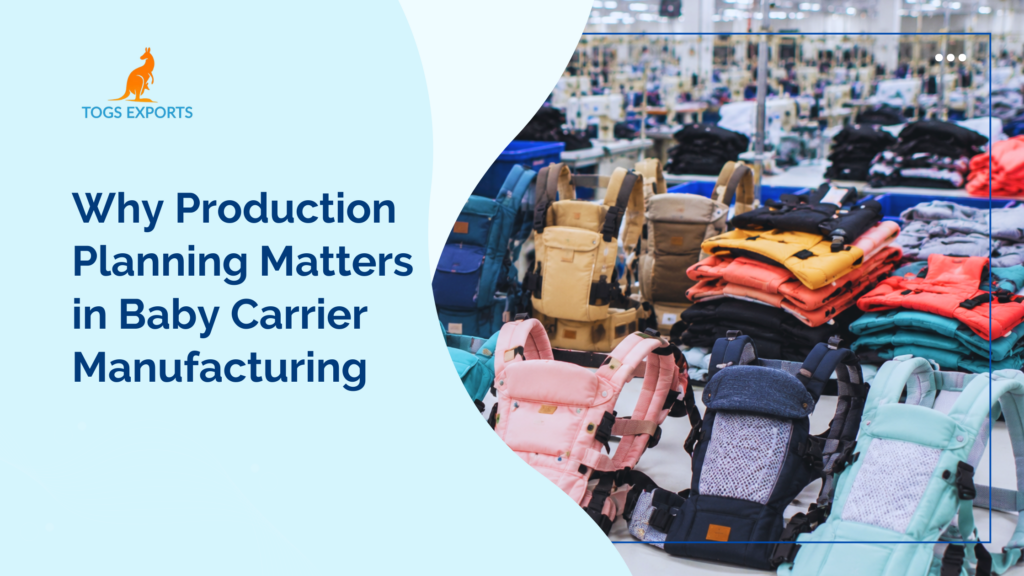
A successful manufacturing process depends on more than skilled production teams and quality materials. It begins with careful planning that ensures every stage works together efficiently. Without proper coordination, even well-designed products can experience delays, material shortages, or inconsistent output. This is why Baby Carrier Production Planning is an essential part of every reliable manufacturing system.
Retailers expect products to arrive on time without compromising quality. Meeting those expectations requires more than production capacity. It requires a structured workflow that connects material availability, sampling, cutting, stitching, inspection, and packaging. At Togs Exports, production planning helps us maintain consistency while supporting both small and large manufacturing projects.
How Manufacturing Production Scheduling Improves Workflow
Every manufacturing stage depends on the one before it. Manufacturing Production Scheduling ensures that materials, production teams, and equipment are available when needed. This prevents unnecessary downtime and helps maintain a smooth production flow.
Our scheduling process aligns every department with the production timeline. Fabric cutting, stitching, quality inspection, and finishing follow a planned sequence rather than operating independently. Through Manufacturing Production Scheduling, each stage progresses efficiently without disrupting the overall workflow.
A well-planned schedule also allows manufacturers to respond more effectively to changing production priorities. This flexibility helps maintain delivery commitments while protecting product quality.
Why Factory Production Planning Supports Consistency
Consistency does not happen by chance. It is built through organised systems that define how production moves from one stage to the next. Factory Production Planning ensures that every manufacturing activity follows an approved process.
Production planning includes resource allocation, workload balancing, and process monitoring. During Factory Production Planning, manufacturers coordinate production capacity with order requirements to avoid bottlenecks. This helps maintain stable output across multiple production batches.
Structured planning also improves communication between departments. Everyone works toward the same production objectives, reducing delays caused by unclear workflows.
How Production Workflow Management Reduces Delays
Manufacturing involves many connected activities. If one stage slows down, the entire production line can be affected. Production Workflow Management helps manufacturers monitor progress and identify potential delays before they impact delivery schedules.
Production teams track work at each stage to ensure that materials and components move smoothly through the factory. Through Production Workflow Management, manufacturers can maintain better coordination while reducing interruptions that affect efficiency.
This organised approach also supports quality control. Products spend less time waiting between stages, helping maintain consistent production standards from start to finish.
How Baby Carrier Production Planning Improves Manufacturing Performance
A structured Baby Carrier Production Planning system creates a strong foundation for reliable manufacturing. Every production stage is connected through organised schedules, resource planning, and workflow monitoring. This allows manufacturers to produce consistent products while meeting delivery commitments.
At Togs Exports, we integrate Manufacturing Production Scheduling, detailed Factory Production Planning, and structured Production Workflow Management into our daily operations. Each department follows a planned workflow designed to improve efficiency without compromising quality.
This approach allows us to maintain stable production even as order volumes change. Retailers benefit from predictable manufacturing timelines and products that consistently match approved specifications.
Why Retailers Value Manufacturers With Strong Planning Systems
Retailers rely on manufacturers who can deliver quality products within agreed timelines. A structured planning system creates confidence because production remains organised throughout the manufacturing process.
Working with a manufacturer that prioritises Baby Carrier Production Planning helps retailers reduce supply chain uncertainty and improve inventory planning. Reliable scheduling also supports long-term business relationships because expectations remain clear from production through dispatch.
At Togs Exports, we believe that successful manufacturing begins with careful planning. By combining organised production systems with disciplined workflow management, we help retailers receive consistent products backed by dependable manufacturing processes.
If you are looking for a manufacturing partner that values planning as much as production quality, we would be glad to discuss your requirements.
Phone: +91 99447 50075
Website: www.togsexports.com
FAQ
1. What is baby carrier production planning?
Baby Carrier Production Planning is the process of organising manufacturing activities, resources, and timelines to ensure efficient and consistent production.
2. Why is production scheduling important?
Manufacturing Production Scheduling helps coordinate every production stage, reducing delays and improving workflow efficiency.
3. What does factory production planning include?
Factory Production Planning includes resource allocation, production capacity management, workflow coordination, and timeline planning.
4. How does workflow management improve manufacturing?
Production Workflow Management keeps every production stage connected, reducing interruptions and supporting consistent product quality.
5. Why should retailers choose manufacturers with structured production planning?
A planned manufacturing system improves delivery reliability, maintains consistent product quality, and helps retailers manage inventory more effectively.