
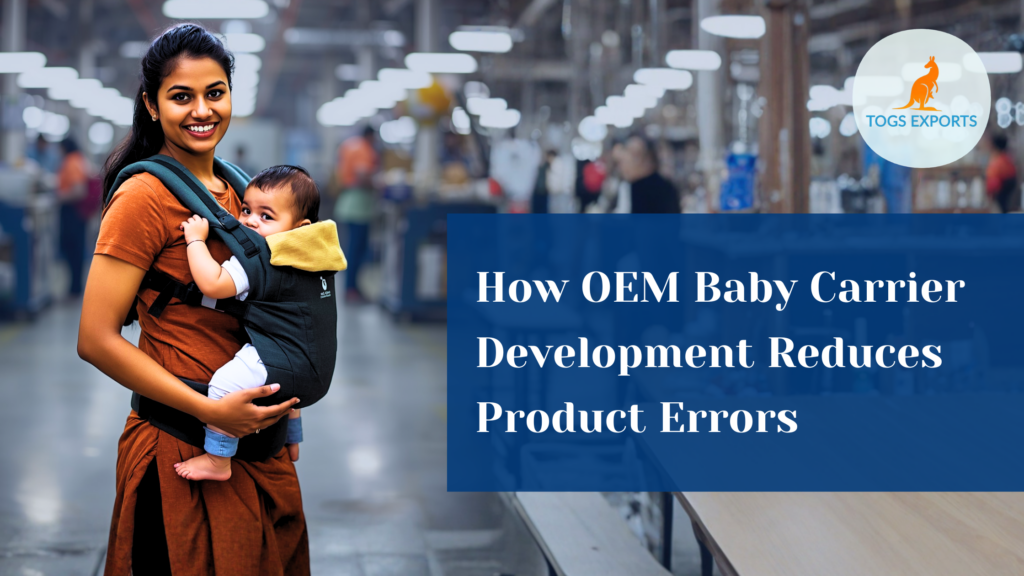
A product may look complete during the design stage, but real challenges often appear only after development begins. Small issues in structure, stitching, or measurements can create larger production problems later. This is why many retailers and baby brands now pay closer attention to the development stage before bulk manufacturing starts. A structured OEM Baby Carrier Development process helps identify these issues early and improves production accuracy.
Retailers who work closely with manufacturers during development gain better control over product performance. They can refine the design before production moves into larger quantities. This approach not only improves consistency but also reduces delays and material waste during manufacturing. At Togs Exports, we treat development as an important part of building a stable and reliable product.
Why Product Refinement Matters Before Production
Every baby carrier design goes through adjustments before it becomes production-ready. Even small changes in panel structure or strap positioning can affect usability and comfort. Through Baby Carrier Product Refinement, manufacturers test how the carrier performs under practical conditions.
This stage allows teams to improve the design without affecting large-scale production later. Stitching balance, fabric behavior, and structural alignment are reviewed carefully during Baby Carrier Product Refinement. These refinements help reduce manufacturing errors and improve product stability across batches.
Manufacturers who skip refinement often face inconsistencies during production. Small issues become more difficult to correct once production has already started. This is why a structured development system creates better long-term results for retailers and brands.
How OEM Sample Approval Process Improves Accuracy
Before moving into final production, manufacturers create approval samples to confirm that the product meets expectations. The OEM Sample Approval Process ensures that all technical and visual details are verified before production begins.
During this stage, manufacturers evaluate stitching quality, measurements, fitting, and finishing. Retailers also review the sample to ensure it aligns with their requirements. A stable OEM Sample Approval Process reduces confusion between development and production teams.
This process also helps manufacturers standardize the production method. Once the sample receives approval, it becomes the reference for future batches. This improves production consistency and reduces avoidable errors during manufacturing.
Why Carrier Design Correction Workflow Is Important
A product rarely reaches its final form in its first version. Most baby carriers require adjustments during development. The Carrier Design Correction Workflow allows manufacturers to identify and correct technical issues before production begins.
This workflow focuses on improving functionality without affecting the overall design concept. Manufacturers review factors such as load handling, panel shaping, and strap integration. Through a controlled Carrier Design Correction Workflow, production teams can refine the carrier step by step.
These corrections reduce production risks and improve manufacturing efficiency. Retailers benefit because the final product performs more consistently in actual use. This approach also helps avoid repeated revisions after bulk production starts.
How OEM Baby Carrier Development Supports Production Stability
Production stability depends heavily on how well the product is developed before manufacturing. A structured OEM Baby Carrier Development system creates a clear connection between design and production. It allows manufacturers to test, refine, and standardize the product before scaling output.
At Togs Exports, our development process focuses on reducing variation during manufacturing. We combine Baby Carrier Product Refinement, a structured OEM Sample Approval Process, and a controlled Carrier Design Correction Workflow to improve product accuracy.
This approach helps maintain production consistency while reducing avoidable manufacturing issues. It also gives retailers better confidence in the final product because the carrier has already gone through multiple stages of refinement before production begins.
Why Retailers Benefit From Structured Development Systems
Retailers today expect more than product availability. They look for manufacturing partners who can maintain consistency across every stage of production. A structured OEM Baby Carrier Development process helps manufacturers deliver products that match approved standards.
When development and production work together, the final product becomes more reliable. Retailers face fewer product issues and gain better visibility into the manufacturing process. This improves long-term business relationships and product stability.
At Togs Exports, we focus on building products through controlled development systems rather than rushing directly into production. Our process helps ensure that every baby carrier is refined, tested, and aligned with manufacturing standards before final output begins.
If you are planning to develop a new product range and want manufacturing support through a structured development process, we would be glad to discuss your requirements.
Phone: +91 99447 50075
Website: www.togsexports.com
FAQ
1. What is OEM baby carrier development?
OEM Baby Carrier Development is the process of refining and preparing a baby carrier design before final production begins.
2. Why is sample approval important in manufacturing?
The OEM Sample Approval Process helps verify measurements, stitching, and product structure before production starts.
3. What happens during product refinement?
During Baby Carrier Product Refinement, manufacturers improve design accuracy, fitting, and usability through controlled adjustments.
4. How does design correction reduce production errors?
The Carrier Design Correction Workflow identifies technical issues early and corrects them before bulk manufacturing begins.
5. Why do retailers prefer structured OEM development?
Structured development improves production consistency, reduces manufacturing errors, and creates more stable product output.