
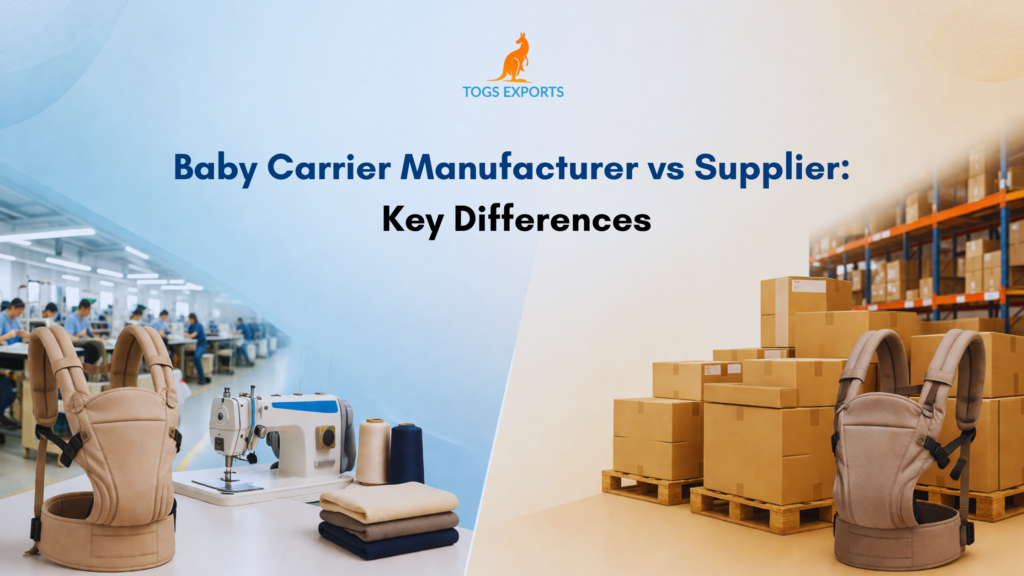
Retailers often assume that sourcing from any supplier will deliver the same results. However, the difference between a Baby Carrier Manufacturer vs Supplier becomes clear only after products reach customers. Manufacturing directly affects product structure, durability, and consistency. This is why many retailers now focus on understanding where and how their products are actually made.
A supplier may provide access to products, but a manufacturer builds them from the ground up. This distinction shapes the entire product experience. Retailers who recognise this difference gain better control over their product line and long-term brand reliability.
Understanding the Role of a Manufacturer in Production
A manufacturer manages every stage of production, from material selection to final assembly. This allows them to maintain consistency across each product batch. In a structured environment, Carrier Quality Inspection Process and production control go hand in hand.
Manufacturers follow defined systems to ensure that each product meets the same standard. This includes stitching accuracy, panel alignment, and load handling. These processes create predictable results that retailers can rely on.
How Suppliers Operate in the Supply Chain
A supplier focuses on sourcing and distributing products rather than producing them. They may work with multiple factories, which can lead to variation in quality. This makes it harder to maintain consistency across orders.
Without direct involvement in production, suppliers cannot always control how products are made. This limitation affects long-term product reliability. Retailers may face inconsistencies that impact customer satisfaction.
Why Production Control Impacts Product Quality
Product quality is not defined at the end of production. It is built into every stage of the process. A manufacturer ensures that materials, stitching, and structure remain consistent across batches. This level of control improves product durability.
In contrast, suppliers may not have visibility into production changes. Even small variations can affect how the product performs. This is why retailers often prefer working directly with manufacturers.
Comparing Consistency Between Manufacturer and Supplier
Consistency is essential for building trust with customers. A manufacturer uses structured systems to repeat the same process for every order. This ensures that each product matches previous batches.
Suppliers may offer convenience, but consistency can vary depending on sourcing. This creates uncertainty for retailers who rely on stable product performance. Understanding the Baby Carrier Manufacturer vs Supplier difference helps avoid this risk.
Why Retailers Prefer Direct Manufacturing Partnerships
Retailers who work with manufacturers gain better communication and control. They can discuss product requirements directly with the production team. This improves clarity and reduces errors.
Direct manufacturing also allows for better planning and consistent supply. Retailers can align their product strategy with production capabilities. This supports long term business growth and reliability.
At Togs Exports, we operate as a direct manufacturer with controlled production systems. We focus on maintaining consistency, quality, and structured output across every batch.
If you are evaluating your sourcing approach and want clarity on Baby Carrier Manufacturer vs Supplier, we would be glad to discuss your requirements.
Phone: +91 99447 50075
Website: www.togsexports.com
FAQ
- What is the main difference between a manufacturer and a supplier?
A manufacturer produces the product, while a supplier sources and distributes it. - Why do retailers prefer manufacturers over suppliers?
Manufacturers provide better quality control, consistency, and production visibility. - Does working with a supplier affect product quality?
Yes, since suppliers may not control production, quality can vary between batches. - Can manufacturers ensure consistent product output?
Yes, structured production systems help maintain the same quality across all orders. - Which is better for long-term growth?
Working with a manufacturer is better for maintaining quality, consistency, and brand reliability.