Kumar Vijayaraj

Ergonomic Buckle Baby Carrier Manufacturer Trends

Why Ergonomic Buckle Baby Carriers Are Popular Among Modern Parents

A very noticeable shift is shaping the baby carrier market. Parents are no longer choosing carriers based only on appearance. They expect comfort, support, and ease of use in daily life. This shift is influencing what retailers stock and how they choose suppliers. When working with an Ergonomic Buckle Baby Carrier Manufacturer, retailers begin to see how manufacturing directly affects product performance. Modern parents look for carriers that support both the baby and the caregiver. This demand has increased the popularity of ergonomic buckle carriers. These products combine structure with flexibility, making them suitable for everyday use. Why Retailers Prefer an Ergonomic Buckle Baby Carrier Manufacturer Retailers focus on products that perform consistently. Ergonomic carriers distribute weight evenly across the shoulders and waist. This improves comfort during extended use. A reliable Structured Baby Carrier Factory ensures that each carrier maintains proper structure. Panel alignment and reinforcement are controlled during production. This helps the carrier retain its shape over time. At the same time, Ergonomic Infant Carrier Manufacturing supports natural positioning for the baby. This balance between structure and comfort makes ergonomic carriers a preferred choice. How Adjustable Strap Carrier Production Improves Usability Ease of adjustment is essential in buckle carriers. Parents need carriers that adapt quickly to different body types. This flexibility depends on how the adjustment system is produced. During Adjustable Strap Carrier Production, straps and buckles are integrated with precision. Each component must move smoothly while maintaining strength. A well-managed, structured baby carrier factory ensures that adjustment systems function consistently. Meanwhile, Ergonomic Infant Carrier Manufacturing maintains comfort even when straps are adjusted. This improves the overall user experience. Why Structure Matters in Ergonomic Infant Carrier Manufacturing Ergonomic performance depends on controlled manufacturing. Even a well-designed carrier requires disciplined production to perform reliably. In Ergonomic Infant Carrier Manufacturing, weight distribution remains a key focus. The back panel, straps, and waist support must work together. This requires accurate stitching and material handling. A consistent, structured Baby Carrier Factory maintains these standards across every batch. At the same time, Adjustable Strap Carrier Production ensures flexibility without weakening the structure. Growing Demand for Ergonomic Buckle Carriers in Retail Retailers are seeing steady demand for ergonomic carriers. Parents are more aware of comfort and safety. They prefer products that perform well in daily use. Working with an Ergonomic Buckle Baby Carrier Manufacturer helps retailers meet these expectations. Manufacturing consistency ensures that each product delivers the same performance. Facilities focused on Ergonomic Infant Carrier Manufacturing maintain this consistency. Combined with stable Adjustable Strap Carrier Production and controlled systems in a Structured Baby Carrier Factory, retailers can offer reliable products. At Togs Exports, we focus on maintaining this balance between structure and comfort. Our production systems are designed to deliver consistent quality in every batch. If you are planning to expand your range with ergonomic buckle carriers and want to work with an Ergonomic Buckle Baby Carrier Manufacturer, we would be glad to discuss your requirements. Phone: +91 99447 50075 Website: www.togsexports.com    

Why Ergonomic Buckle Baby Carriers Are Popular Among Modern Parents Read More »

Private Label Baby Carrier Manufacturer for Stock Consistency

How Reliable Manufacturing Helps Retailers Maintain Stock Consistency

The moment a retailer runs out of a popular product, momentum slows. Customers leave without purchasing. Meanwhile, trust begins to weaken. In the baby products market, consistency matters as much as design or pricing. Retailers depend on stable supply to maintain customer confidence. This is where a dependable Private Label Baby Carrier Manufacturer plays a crucial role. Reliable manufacturing ensures that products arrive on time and remain identical across every shipment. Without this stability, retailers face delays, quality differences, and unpredictable restocking cycles. As a direct Baby Carrier Manufacturing Company, we understand that steady production is the backbone of successful retail partnerships. Production Stability Starts Inside an Infant Carrier Production Unit Stock consistency begins at the production floor. A structured Infant Carrier Production Unit operates with controlled workflows and clear scheduling. Each stage of production follows defined timelines. Fabric cutting, stitching, and assembly must progress without disruption. When manufacturing systems lack structure, delays quickly appear. One small bottleneck can push delivery schedules back by weeks. Retailers then struggle to maintain shelf availability. A disciplined Baby Carrier Manufacturing Company avoids this situation by coordinating production capacity with retailer demand. Inside our facility, the Infant Carrier Production Unit follows planned manufacturing cycles. This approach allows retailers to forecast inventory with greater confidence and maintain uninterrupted product availability. Consistent Materials Support Reliable Production Stock consistency depends not only on production speed but also on material stability. When raw materials vary between batches, production timelines become unpredictable. Fabric replacements or hardware shortages can delay entire orders. A professional Custom Baby Carrier Manufacturer secures reliable material sourcing before production begins. Fabric quality, buckle supply, and thread specifications remain consistent across cycles. This stability helps the Infant Carrier Production Unit operate without interruptions. As a Baby Carrier Manufacturing Company, we maintain verified supplier relationships. This ensures that materials arrive on schedule and meet technical standards. Retailers benefit because production continues smoothly without unexpected material changes. Quality Control Prevents Rework and Delays Quality issues often create hidden manufacturing delays. If defects appear late in production, factories must repeat entire processes. This rework consumes time and slows delivery schedules. A responsible Private Label Baby Carrier Manufacturer integrates quality checks throughout the manufacturing process. Stitch inspection, load testing, and finishing verification occur during assembly rather than after production ends. In our Infant Carrier Production Unit, quality monitoring happens continuously. This prevents defects from accumulating. As a result, shipments leave the factory without production setbacks. Retailers receive orders on time and maintain stable stock levels. Reliable Manufacturing Strengthens Long Term Retail Planning Retailers rely on predictable inventory cycles to plan promotions and product launches. When deliveries fluctuate, planning becomes difficult. Inconsistent supply often leads to missed sales opportunities. A dependable Custom Baby Carrier Manufacturer helps retailers align production schedules with retail demand. Manufacturing capacity must support repeat orders without sudden delays. This reliability allows retailers to maintain consistent shelf presence. As a structured Baby Carrier Manufacturing Company, we coordinate production forecasting with our partners. Our Infant Carrier Production Unit adjusts capacity to match order volumes. This collaboration supports stable inventory planning across retail cycles. Why Private Label Baby Carrier Manufacturer Reliability Matters Retail success depends on steady product availability. Customers expect to find the same reliable products each time they visit a store or online shop. Manufacturing inconsistency disrupts this expectation. Working with a stable Private Label Baby Carrier Manufacturer ensures that supply remains dependable. Consistent materials, disciplined production systems, and controlled quality processes create predictable manufacturing timelines. As a Custom Baby Carrier Manufacturer, we focus on maintaining that reliability for every partner. Our role as a Baby Carrier Manufacturing Company goes beyond product creation. We support retailers by maintaining steady production and dependable restocking cycles. If you are looking for a Private Label Baby Carrier Manufacturer that prioritizes manufacturing reliability and stock consistency, we would be glad to discuss your requirements. Contact us at +91 99447 50075 or visit www.togsexports.com to learn how our manufacturing systems support consistent retail supply.

How Reliable Manufacturing Helps Retailers Maintain Stock Consistency Read More »

Baby Carrier Manufacturing Company

Why Manufacturing Process Matters More Than Design Alone?

Retailers often begin with design. They review colours, patterns, and trending silhouettes. Design certainly attracts attention. However, long-term success depends on what happens inside the factory. As a Baby Carrier Manufacturing Company, we have seen how strong designs fail when production systems lack discipline. The manufacturing process determines durability, safety, and consistency. Therefore, retailers who look beyond appearance protect their brand reputation. Design Attracts Attention, but Process Builds Trust Design influences first impressions. It shapes how parents perceive a product on the shelf. Yet design alone cannot hold weight, secure straps, or withstand daily movement. Only a structured Infant Carrier Production Unit can translate design into safe and reliable output. Inconsistent production weakens even the most attractive models. Fabric panels may shift slightly. Stitch density may vary. Load-bearing zones may not align precisely. These small deviations slowly reduce product lifespan. A professional Baby Carrier Manufacturing Company controls every technical parameter during assembly. As a result, the final carrier reflects both design intent and engineering stability. Why Process Control Defines a Private Label Baby Carrier Manufacturer Retailers who work with a Private Label Baby Carrier Manufacturer expect more than visual accuracy. They expect batch consistency. However, without documented systems, each production cycle may differ slightly from the previous one. A disciplined Infant Carrier Production Unit maintains standard operating procedures for cutting, stitching, and finishing. Fabric tension must remain uniform. Reinforcement must match technical drawings. Hardware placement must follow measured alignment. When a Private Label Baby Carrier Manufacturer controls these stages carefully, retailers can reorder with confidence. We operate as a direct manufacturing partner. Therefore, we monitor each stage internally. This control prevents variation between shipments and protects long-term brand identity. Quality Testing Reflects the Strength of a Baby Carrier Manufacturing Company Testing reveals whether the manufacturing process truly supports the design. Basic inspection alone cannot expose hidden strain points. A reliable Baby Carrier Manufacturing Company performs repeated load testing under simulated use conditions. Inside a structured Infant Carrier Production Unit, we test seam endurance, buckle resistance, and strap pull strength. These trials replicate daily carrying movements. Consequently, we identify weaknesses before products leave the facility. A responsible Private Label Baby Carrier Manufacturer does not treat testing as a final formality. Instead, testing validates every previous production stage. It confirms that stitching tension, fabric strength, and hardware integration work together as a single system. Material Handling Shapes Long-Term Durability Design drawings specify fabric types and component placements. However, raw material handling determines how those materials perform in practice. Improper storage may affect fabric strength. Inconsistent cutting may distort the panel shape. A structured Infant Carrier Production Unit manages material flow carefully. Fabric inspection occurs before cutting begins. Components are verified before assembly. This disciplined approach ensures that no compromised materials enter production. As a Baby Carrier Manufacturing Company, we understand that retailers depend on uniform quality. Therefore, our process integrates material validation at every stage. A responsible Private Label Baby Carrier Manufacturer protects both infant safety and retailer trust by maintaining strict internal controls. Why Baby Carrier Manufacturing Company Process Matters More Than Design Alone A well-designed product can attract buyers once. However, consistent manufacturing builds repeat business. Retailers benefit when customers experience reliability over time. That reliability does not come from design sketches. It comes from structured systems inside a Baby Carrier Manufacturing Company. Process management defines seam precision. It defines weight distribution balance. It defines how hardware performs under stress. Meanwhile, design enhances appearance but cannot correct technical weaknesses. An experienced Infant Carrier Production Unit understands this distinction clearly. When retailers partner with a Private Label Baby Carrier Manufacturer that values process discipline, they reduce long term risk. Returns decrease. Customer confidence strengthens. Brand reputation stabilizes. As a direct Baby Carrier Manufacturing Company, we believe manufacturing systems deserve as much attention as product aesthetics. Design introduces the product. Process sustains it. Therefore, retailers who evaluate factory standards carefully make stronger long-term decisions. If you are reviewing your production partner and want structured systems that support durability and consistency, we are ready to discuss your requirements. Contact us at +91 99447 50075 or visit www.togsexports.com to learn how our Baby Carrier Manufacturing Company’s approach supports dependable retail partnerships.

Why Manufacturing Process Matters More Than Design Alone? Read More »

Custom Baby Carrier Manufacturer

How a Custom Baby Carrier Manufacturer Protects Your Brand?

Retailers often focus on design, pricing, and packaging when selecting a supplier. However, the real difference lies in how the product is manufactured. As a Custom Baby Carrier Manufacturer, we have seen how poor production decisions create long-term damage for retailers. Many issues do not appear immediately. Instead, they surface after the product reaches parents. When manufacturing standards fall short, brand reputation quietly begins to suffer. Why Structural Precision Matters in Infant Carrier Production Unit A baby carrier must distribute weight evenly across the body. If the internal panel structure lacks balance, pressure builds at specific points. Over time, this leads to seam stress and fabric distortion. Parents may first notice discomfort. Later, they may experience product failure. In a disciplined Infant Carrier Production Unit, structural alignment is never rushed. Each panel must follow technical specifications. Stitch reinforcement must match load zones. When manufacturers skip these checks, durability declines. Retailers then face returns that could have been prevented during production. As a Custom Baby Carrier Manufacturer, we focus on load-tested designs. We simulate repeated movement and carrying conditions. Therefore, structural integrity remains stable across every batch. Material Selection Reflects a Baby Carrier Manufacturing Company’s Standards Material choice directly influences safety and comfort. Low-grade fabrics may tear, fade, or irritate sensitive skin. Weak buckles may crack under tension. These issues rarely appear during packaging inspection. However, they emerge during daily use. A responsible Baby Carrier Manufacturing Company carefully evaluates raw materials before bulk production begins. Fabric tensile strength must meet defined standards. Hardware must pass endurance trials. Without this discipline, consistency becomes impossible. In our facility, material validation forms the foundation of every project. As a Custom Baby Carrier Manufacturer, we understand that retailers rely on uniform quality. Therefore, we verify each material batch before assembly begins. Stitching Discipline Separates Reliable Manufacturing from Risk Stitching determines whether a baby carrier remains secure over time. Uneven thread tension weakens seam strength. Loose finishing increases wear. Although these details may look minor, they often cause long-term reliability concerns. Inside a structured Infant Carrier Production Unit, stitching parameters remain controlled and monitored. Seam density must match fabric type. Reinforcement must align with weight-bearing zones. When production lines rush through these steps, the final product may not withstand real use. A dependable Baby Carrier Manufacturing Company invests time in inspection before packing. We check seam strength under load. We ensure thread consistency across batches. As a result, retailers receive carriers that perform reliably in real conditions. Inconsistent Processes Affect Private Label Baby Carrier Manufacturer Partnerships Retailers who work with a Private Label Baby Carrier Manufacturer expect consistency. However, poor internal systems create variation between shipments. Stitch length may change. Fabric thickness may differ. Buckle quality may fluctuate. These variations typically occur when documentation and quality tracking lack structure. A professional Infant Carrier Production Unit maintains production records for every stage. Material sourcing, stitching settings, and testing data must remain stable across cycles. As a Custom Baby Carrier Manufacturer, we standardize each production parameter. This approach protects brand identity. Retailers can confidently reorder without worrying about unexpected quality differences. Testing Is the Final Protection Layer Testing should validate real-world performance. However, weak manufacturing environments conduct only surface-level inspections. Basic weight checks alone cannot reveal long-term strain points. A reliable Baby Carrier Manufacturing Company performs repeated stress simulations. We examine buckle endurance, strap pull resistance, and seam durability. These tests replicate daily movement conditions. Therefore, hidden weaknesses surface before shipment. When retailers partner with a structured Private Label Baby Carrier Manufacturer, they reduce risk exposure. Manufacturing discipline becomes part of the brand’s silent strength. Manufacturing Standards Define Brand Reputation Retailers often invest heavily in marketing and presentation. Yet product reliability ultimately determines customer loyalty. Poor production shortcuts may reduce initial cost. However, they increase long-term liability. Choosing the right Custom Baby Carrier Manufacturer means choosing structured processes, controlled materials, and tested durability. Responsible manufacturing protects both infants and retail partners. It ensures that every shipment reflects the same level of safety and precision. If you are reviewing your current production partner and want consistent quality from a dependable Baby Carrier Manufacturing Company, we are ready to support your brand with structured and transparent manufacturing systems. Contact us at +91 99447 50075 or visit www.togsexports.com to discuss how our Custom Baby Carrier Manufacturer solutions can support your next collection.

How a Custom Baby Carrier Manufacturer Protects Your Brand? Read More »

Consistent Baby Carrier Manufacturing

How Consistent Baby Carrier Manufacturing Protects Brand Reputation?

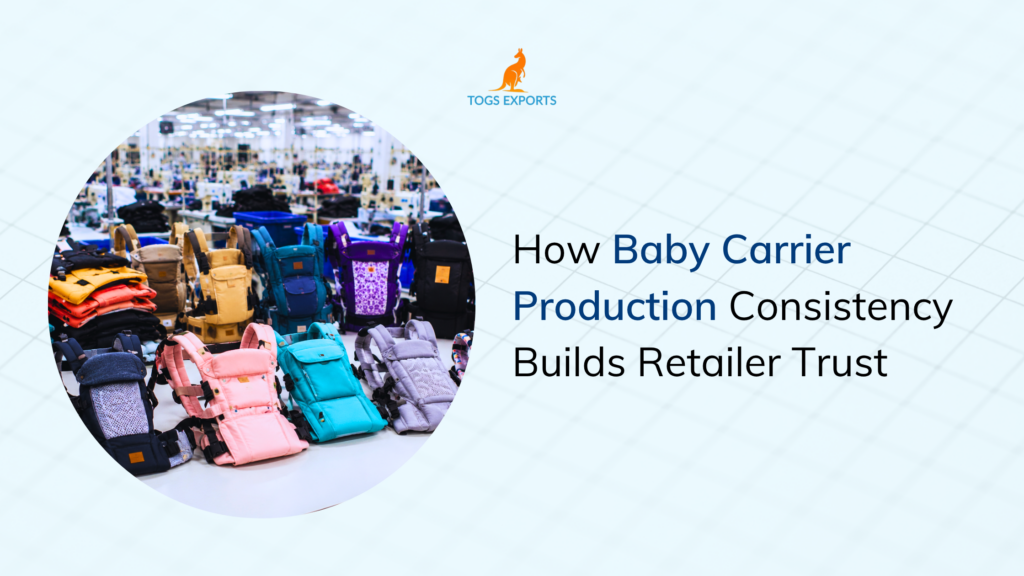
Retail brand reputation does not start on a shelf or a website. It starts much earlier. It starts inside the manufacturing unit. As manufacturers, we see how consistent baby carrier manufacturing quietly shapes how customers feel about a brand over time. Baby carriers support parents and babies every day. When a product feels familiar, reliable, and comfortable each time it is used, trust builds naturally. Retailers who understand this link between consistency and reputation make more confident manufacturing decisions. Customers Feel Consistency Before They See It Most customers do not analyse how a baby carrier is made. Instead, they feel the difference over time. They notice when a product fits the same way and when comfort remains unchanged. Also, they notice when a replacement feels just as reliable as the first one. This experience depends on consistent baby carrier manufacturing. When production follows steady processes, the product behaves the same way across batches. Customers may never mention it, but their confidence grows quietly. Why Inconsistency Slowly Damages Brand Trust Inconsistency rarely causes immediate complaints. More often, it creates doubt. A carrier that feels slightly different leads customers to hesitate. Over time, that hesitation affects repeat purchases. From a manufacturing perspective, these issues often begin with small changes. A fabric handled differently. A stitch tension adjusted without testing. A finishing step rushed to save time. Consistent baby carrier manufacturing prevents these silent issues. It keeps internal standards steady, even when production volumes change. Consistency Reduces Pressure on Retailers Retailers carry responsibility once a product reaches customers. Any quality concern reflects on their brand first. Manufacturing consistency helps reduce this pressure. When production remains stable, retailers can reorder with confidence. They know the product they approved earlier will remain the same later. This predictability protects brand reputation and simplifies inventory planning. Consistency Comes from Discipline, Not Speed Some assume that consistency slows production. In reality, discipline improves it. When teams follow defined processes, errors reduce. Rework decreases. Production becomes smoother. As manufacturers, we see how consistent baby carrier manufacturing supports efficiency. It removes uncertainty and allows teams to focus on doing the job right, every time. Retailers benefit because dependable manufacturing supports dependable supply. Long-Term Retail Partnerships Depend on Stability Retailers prefer partners who deliver the same standard repeatedly. Manufacturing consistency builds that trust. It shows commitment to process rather than shortcuts. Over time, this stability strengthens collaboration. Retailers feel comfortable planning growth. Manufacturers understand expectations clearly. Both sides benefit from a shared focus on reliability. Consistency Extends Beyond the Product Consistency does not stop with stitching. It extends to packaging, handling, and readiness for delivery. When these elements remain stable, retailers face fewer surprises after dispatch. This reliability supports smoother operations and protects how products arrive and perform in the market. A Manufacturer’s Closing Perspective From our side, consistency is not about perfection. It is about responsibility. It means showing up every day and following the same standards, even when no one is watching. At Togs Exports, we believe consistent baby carrier manufacturing protects retail brand reputation in ways marketing never can. Quietly. Steadily. Over time. 📞 +91 99447 50075🌍 www.togsexports.com READ MORE: Inside a Direct Baby Carrier Manufacturing Unit Guide!! Safe and Comfortable Carriers: How We Make Them!! Top Benefits of Partnering with a Direct Baby Carrier Manufacturer

How Consistent Baby Carrier Manufacturing Protects Brand Reputation? Read More »

direct baby carrier manufacturing partner

Why Serious Retailers Only Work with Direct Baby Carrier Manufacturers!!

Retailers who build brands for the long term make careful decisions about sourcing. They do not rely only on samples or short-term availability. Instead, they look at how products are made and who stands behind them. This is why many serious retailers choose a direct manufacturing partner rather than layered sourcing models. Baby carriers support parents and babies every day. Small variations in construction affect comfort, durability, and trust. Retailers understand that these outcomes depend on manufacturing control, not just final appearance. A Direct Manufacturing Partner Offers Process Ownership A direct manufacturing partner controls the production process from the beginning. Material handling, stitching flow, and finishing decisions stay within one manufacturing unit. This ownership ensures consistency across every batch. Retailers benefit from this clarity. When production stays under one roof, results remain predictable. Reorders match previous standards. Quality does not shift unexpectedly. This reliability supports confident retail planning. Responsibility Matters More Than Speed Serious retailers value responsibility over fast output. A direct manufacturing partner focuses on doing the work correctly rather than rushing completion. Manufacturing teams follow defined processes because they understand how shortcuts create problems later. This disciplined approach reduces avoidable issues. Retailers see fewer complaints and lower return rates because products perform as expected during real use. Responsibility at the manufacturing stage protects retail reputation. Consistency Builds Retail Confidence Consistency remains one of the hardest challenges in product sourcing. A direct manufacturing partner achieves consistency through repeatable processes and controlled execution. Each production cycle follows the same standards. This stability allows retailers to scale without fear. Larger orders do not compromise quality. Retailers can expand product lines knowing manufacturing discipline remains intact. Clear Accountability Simplifies Collaboration Retailers prefer clear communication. A direct manufacturing partner provides that clarity by owning outcomes fully. When feedback arises, it goes directly to the team that controls production decisions. This structure saves time and strengthens trust. Retailers do not manage multiple layers. They work with one accountable manufacturing unit. This direct relationship supports smoother long-term collaboration. Manufacturing Insight Improves Product Decisions Retailers working with a direct manufacturing unit to gain better insight into how products behave over time. They understand material performance and construction logic. This knowledge improves decision making. Manufacturing-led collaboration helps retailers plan responsibly. Adjustments happen with process awareness rather than trial and error. This alignment benefits both sides. Assembly Completes Products, Manufacturing Builds Value Assembly-focused sourcing concentrates on finishing products. Manufacturing builds value into them. A direct manufacturing partner designs baby carriers to perform consistently during daily use, not just during inspection. Retailers who understand this difference choose manufacturing-led partners. They know performance matters more than appearance alone. A Manufacturer’s Closing Perspective Serious retailers choose partners who take responsibility seriously. At Togs Exports, we work as a direct manufacturing partner because we believe control, consistency, and accountability define strong manufacturing relationships. If your retail brand values long-term reliability and disciplined production, we are ready to connect. 📞 +91 99447 50075 🌍 www.togsexports.com READ MORE: Choosing the Best and Safest Baby Carrier: A Business Guide!! Top Qualities Every Retailer Wholesale Baby Carriers Suppliers Wholesale Baby Carriers for Your Store Direct from Manufacturers!!

Why Serious Retailers Only Work with Direct Baby Carrier Manufacturers!! Read More »

Direct baby carrier manufacturing

Manufacturing Is Not Assembly In Direct Baby Carrier Manufacturing

Retailers often hear the words manufacturing and assembly used interchangeably. Yet the two represent very different approaches. When a retailer partners with a direct baby carrier manufacturing operation, they engage with a process built on responsibility, control, and long-term thinking. This distinction shapes product performance, consistency, and brand trust. Baby carriers are daily-use products. Parents rely on them for comfort, safety, and support. Because of this, the way a baby carrier is made matters as much as how it looks. Manufacturing defines the outcome long before the final product reaches a box. Why Direct Baby Carrier Manufacturing Requires Discipline In direct baby carrier manufacturing, discipline drives every decision. The process begins with understanding how weight distributes across the carrier. It continues with fabric behavior, stitch structure, and reinforcement planning. Each stage connects to how the carrier performs during real use. Assembly-focused operations concentrate on joining parts. Manufacturing-led operations focus on building structure. This difference allows manufacturing teams to control quality from the first cut to the final inspection. Retailers benefit because this discipline reduces variation and ensures consistency across production batches. Manufacturing Control Starts Before Production Begins Manufacturing control does not begin on the sewing floor. It begins during material evaluation and process planning. A direct baby carrier manufacturing unit evaluates fabric stretch, durability, and comfort before committing to production. Stitch density and seam placement follow tested standards. This early control prevents downstream issues. Instead of correcting problems after completion, manufacturing teams prevent them before they appear. Retailers experience fewer quality deviations because the process itself stays stable. Assembly Finishes Products, Manufacturing Builds Performance Assembly delivers a finished product. Manufacturing builds performance into that product. This distinction becomes clear over time. Carriers produced through assembly may appear identical at first glance. However, long-term use reveals differences in comfort, stability, and durability. In direct baby carrier manufacturing, teams design carriers to handle daily movement, repeated wear, and varied body types. This performance-driven mindset protects retailer brands from complaints and returns. Manufacturing ensures the carrier works as intended, not just on the shelf. Manufacturing Accountability Reduces Retailer Risk Accountability defines manufacturing-led partnerships. A direct baby carrier manufacturing unit owns every stage of production. If an issue arises, responsibility does not shift elsewhere. The manufacturing team reviews the process and corrects it at the source. In fact, retailers value this clarity. It simplifies communication and builds confidence. Instead of managing multiple vendors, retailers work with one accountable manufacturing partner. This structure saves time and protects reputation. Consistency Comes from Manufacturing Discipline Consistency does not happen by chance. It comes from repeatable processes and controlled execution. In manufacturing-led environments, teams follow defined standards across all production runs. This approach allows retailers to scale orders without fearing quality shifts. With direct baby carrier manufacturing, output grows while quality remains steady. Retailers can plan inventory and product launches with confidence. Meanwhile, manufacturing discipline supports growth without compromise. Manufacturing Responsibility Extends Beyond the Factory Floor Manufacturing responsibility does not end after stitching. Packaging, labeling, and handling reflect the same discipline applied during production. A direct baby carrier manufacturing unit considers how products move through storage and transit. This holistic approach supports smoother operations and fewer disruptions. Especially, retailers benefit from products that arrive consistent, compliant, and ready for market. A Manufacturer’s Closing Perspective Manufacturing is not assembly. It is a commitment to process, accountability, and performance. At Togs Exports, we work through direct baby carrier manufacturing because quality begins at the process level, not at the final step. If your retail brand values consistency, responsibility, and long-term reliability, we are ready to support that vision. 📞 +91 99447 50075 🌍 www.togsexports.com Read More: How Manufacturing Discipline Impacts Baby Carrier Returns and Complaints From Stitching to Final Check in Baby Carrier Manufacturing Process How Baby Carrier Manufacturers Ensure Quality?

Manufacturing Is Not Assembly In Direct Baby Carrier Manufacturing Read More »

responsible baby carrier manufacturer

Why Retailers Choose Manufacturers Who Take Responsibility Seriously?

Retailers today look beyond samples and specifications. They look at how a product is made and who stands behind it. This is why many retailers prefer working with a responsible baby carrier manufacturer. Responsibility in manufacturing is not about promises. It is about daily decisions made on the production floor that directly affect product reliability, safety, and trust. When baby carriers are used every day by parents, responsibility cannot be optional. Responsibility Begins Inside the Manufacturing Unit A responsible baby carrier manufacturer understands that accountability starts at the source. Manufacturing decisions are taken with a clear awareness of how the product will be used in real life. This mindset shapes every stage of production. Responsibility shows in controlled processes and consistent handling of materials. It also shows in how carefully each carrier is reviewed before approval. Retailers value this approach because it reduces uncertainty and builds confidence from the first order. Why Responsibility Protects Retail Brand Trust Retailers carry the responsibility of customer trust. When a product fails, the impact reaches the retail brand first. This is why choosing a responsible baby carrier manufacturer matters so much. Manufacturers who take responsibility seriously focus on preventing issues rather than reacting to them. They maintain consistency across production and avoid shortcuts that can lead to complaints later. Retailers benefit from fewer returns and stronger customer confidence. How a Responsible Baby Carrier Manufacturer Maintains Consistency Consistency is one of the hardest parts of manufacturing. It requires discipline, not just intention. A responsible baby carrier manufacturer applies the same standards across every production cycle. This consistency ensures that approved products remain unchanged over time. Retailers can reorder confidently, knowing that quality will not vary between batches. This stability supports long-term retail planning and growth. Responsibility Means Thinking Beyond Immediate Orders Responsible manufacturing looks beyond short-term output. Baby carriers are products that support daily routines for parents and babies. A responsible baby carrier manufacturer considers durability, comfort, and long-term performance at every stage. This long-term thinking aligns closely with retailer needs. Retailers prefer partners who understand that reputation is built slowly and damaged quickly. Responsibility protects both sides of the partnership. Transparency Strengthens Retailer Confidence Retailers value clarity. Manufacturers who take responsibility seriously are transparent about how products are made and approved. This openness builds trust and simplifies communication. A responsible baby carrier manufacturer does not hide behind vague assurances. Instead, they stand by their processes and decisions. Retailers feel more secure when they know what happens inside the manufacturing unit. Shared Responsibility Builds Stronger Partnerships Retailers and manufacturers share the same goal. Deliver reliable products to parents. When manufacturers take responsibility seriously, collaboration becomes easier. A responsible baby carrier manufacturer listens, adapts when needed, and maintains standards even under pressure. This shared responsibility creates partnerships that last beyond individual orders. Final Thought Retailers do not choose manufacturing partners lightly. Responsibility is one of the strongest signals of reliability. Working with a responsible baby carrier manufacturer helps retailers protect their brand, reduce risk, and build long-term trust with customers. If you are looking to work with a responsible baby carrier manufacturer who values accountability and long-term partnerships, we would be glad to connect. 📞 +91 99447 50075 🌍 www.togsexports.com READ MORE:  Top Qualities Every Retailer Wholesale Baby Carriers Suppliers Safe and Comfortable Carriers: How We Make Them!! Top Qualities Every Retailer Wholesale Baby Carriers Suppliers

Why Retailers Choose Manufacturers Who Take Responsibility Seriously? Read More »

export ready baby carrier manufacturing

What Retailers Should Know About Export-Ready Baby Carrier Manufacturing!!

When retailers look beyond local sourcing, manufacturing standards become more visible. Baby carriers meant for international markets must meet expectations that go beyond appearance or basic comfort. This is where export ready baby carrier manufacturing plays a critical role. Retailers who understand how export readiness is built at the manufacturing stage are better equipped to choose reliable partners. Export readiness is not a label added later. It is shaped through disciplined production, documentation, and consistency inside the manufacturing unit. What Export Ready Baby Carrier Manufacturing Really Means Export ready baby carrier manufacturing starts with mindset. Products are manufactured knowing they will be evaluated across borders by different markets, regulations, and customer expectations. This awareness influences how materials are selected, how stitching is reinforced, and how finishing is handled. Manufacturers who work with export intent follow consistent internal standards. Every baby carrier is produced with the understanding that it must perform the same way, regardless of destination. Retailers benefit from this consistency because it reduces uncertainty when scaling across markets. Manufacturing Discipline Behind Export Readiness Export readiness depends heavily on discipline. Controlled processes ensure that each production cycle follows the same standards. In fact, this reduces variation between batches, which is a common concern for retailers sourcing at scale. In the manufacturing of export-ready baby carriers, strict monitoring of production stages is essential and reflects strong discipline. Key aspects such as stitching strength, comfort areas, and the overall final structure undergo careful review. This rigorous quality assurance ensures that the finished products maintain reliability throughout transport, storage, and daily use. Why Documentation and Process Transparency Matter For retailers, confidence in the production process is as crucial as physical samples. Export-oriented manufacturing units address this by maintaining clear production documentation and ensuring traceable processes. This transparency supports smoother coordination and faster decision making. Export ready baby carrier manufacturing allows retailers to validate quality through process clarity, not assumptions. It also helps reduce delays caused by missing or unclear information. Consistency Across Shipments Builds Retail Confidence One of the biggest challenges retailers face is inconsistency across shipments. Export readiness addresses this concern directly. Manufacturing units that focus on export standards maintain uniformity across production cycles. Export ready baby carrier manufacturing ensures that what retailers approve initially continues through future orders. This consistency protects brand reputation and simplifies inventory planning. Retailers gain confidence knowing quality will not shift unexpectedly. Finishing Standards That Travel Well Products designed for export must withstand handling, packaging, and transport. Finishing quality plays a major role here. Smooth edges, secure seams, and balanced structure help baby carriers retain performance even after long transit. Manufacturers who focus on export readiness treat finishing as a functional requirement, not just visual appeal. Especially, this approach reduces post delivery issues and improves retailer satisfaction. Long Term Value of Export Ready Manufacturing Retailers sourcing internationally often think beyond immediate orders. They look for partners who can grow with them. Export ready baby carrier manufacturing supports this long term view by offering predictable quality and scalable production. Manufacturers who are set up to export have a leg up in meeting the retail sector’s increasing needs. This stability helps retailers focus on market growth rather than supply concerns. Final Thought Export readiness the result of consistent manufacturing discipline, clear processes, and responsible production practices. Retailers who understand export ready baby carrier manufacturing are better positioned to choose partners that support long term success. If you would like to understand how we approach export ready baby carrier manufacturing inside our unit, we would be glad to connect and share our process. 📞 +91 99447 50075 🌍 www.togsexports.com Read More:  From Stitching to Final Check in Baby Carrier Manufacturing Process Why Wholesale Baby Carrier Suppliers Important for Baby Brands How Baby Carrier Manufacturers Ensure Quality?

What Retailers Should Know About Export-Ready Baby Carrier Manufacturing!! Read More »

How Manufacturing Discipline Reduces Baby Carrier Returns

How Manufacturing Discipline Impacts Baby Carrier Returns and Complaints

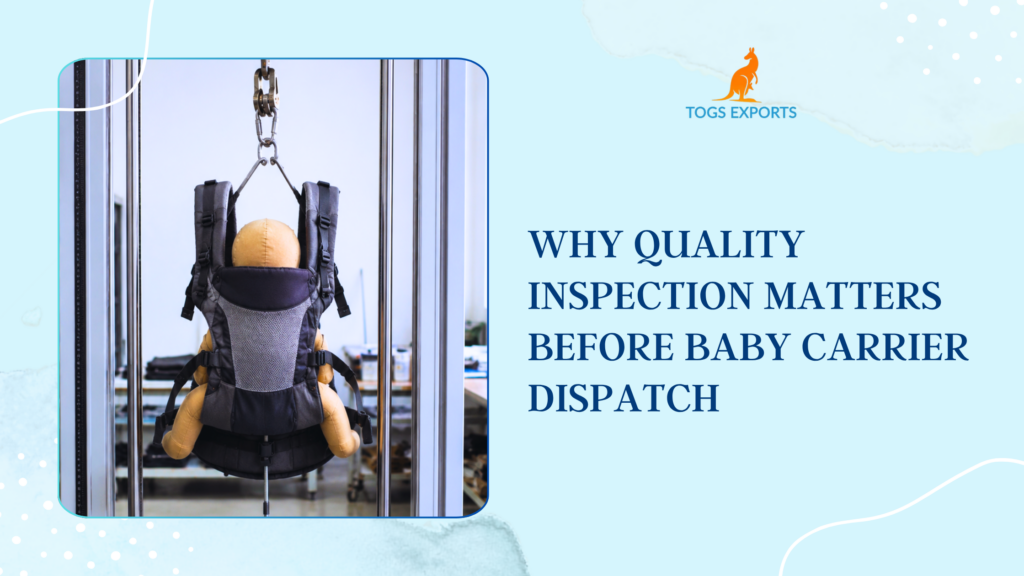
Retailers often face returns and complaints that seem unexpected on the surface. A loose stitch, uneven support, or discomfort reported after use can quickly affect customer trust. In many cases, these issues do not begin at the store level. They begin much earlier, inside the manufacturing unit. So understanding manufacturing discipline in baby carrier production helps retailers see why some products perform consistently while others create repeated concerns. When discipline guides production, fewer problems reach the market, and retailer confidence stays intact. Why Manufacturing Discipline Matters More Than Ever Manufacturing discipline shapes how every baby carrier is produced. It reflects how closely processes are followed and how consistently standards are applied. When discipline is strong, production stays predictable and controlled. Retailers benefit from this stability because disciplined manufacturing reduces unexpected variations. Each carrier follows the same construction logic, which lowers the chances of defects that later become complaints. Manufacturing Discipline in Baby Carrier Production and Product Consistency Consistency is one of the strongest defenses against returns. Manufacturing discipline in baby carrier production ensures that materials, stitching patterns, and finishing remain uniform across batches. When discipline is lacking, small deviations creep in. These changes may not be visible immediately, but they affect comfort and performance over time. Retailers experience the impact later through feedback and returns. Strong discipline prevents this chain reaction. How Process Control Reduces Usage Related Complaints Many complaints arise after repeated use rather than initial inspection. This is where disciplined manufacturing makes a difference. Load bearing areas, comfort zones, and support structures are handled carefully during production. Manufacturing discipline in baby carrier production ensures that these critical areas receive consistent attention. This reduces issues related to wear, discomfort, and imbalance. Retailers see fewer concerns reported by parents during regular use. Early Corrections Prevent Market Level Problems Discipline allows manufacturers to identify and correct issues during production. Instead of pushing products forward quickly, controlled checks pause the process when needed. These early corrections prevent defects from reaching retailers. Manufacturing discipline in baby carrier production acts as a filter, stopping small issues from becoming large customer problems. Retailers benefit from smoother post sale experiences. Finishing Standards and Their Role in Customer Satisfaction Finishing affects how parents perceive quality immediately. Rough edges, uneven seams, or stiffness can lead to discomfort complaints. Disciplined manufacturing ensures finishing is treated with the same care as construction. By maintaining consistent finishing standards, manufacturers reduce negative feedback. Retailers notice fewer cosmetic and comfort related returns when discipline guides this stage. Why Lack of Discipline Increases Retail Risk When discipline is inconsistent, manufacturing becomes unpredictable. Products may look similar but perform differently. This unpredictability increases retail risk. Manufacturing discipline in baby carrier production protects retailers by creating reliable output. It reduces guesswork and helps retailers trust what they stock and sell. Confidence grows when performance stays consistent. Long Term Impact on Retail Trust and Brand Reputation Returns and complaints affect more than logistics. They influence how customers view a retail brand. Disciplined manufacturing supports retailers by minimizing these issues before products reach shelves. Over time, manufacturing discipline in baby carrier production strengthens trust. Retailers experience fewer disruptions and better customer satisfaction. This stability supports long term growth. Final Thought Returns and complaints rarely happen by chance. They often reflect what happens inside the manufacturing unit. Manufacturing discipline in baby carrier production plays a direct role in reducing these issues. Retailers who work with disciplined manufacturers gain consistency, reliability, and peace of mind. These qualities protect both the product and the retail brand. If you would like to understand how manufacturing discipline in baby carrier production is applied inside our unit, we would be glad to connect and share our approach. 📞 +91 99447 50075 🌍 www.togsexports.com READ MORE: Safe and Comfortable Carriers: How We Make Them!! Choosing the Best and Safest Baby Carrier: A Business Guide!! Weight Distribution in Baby Carrier: What Physics Tells Us?

How Manufacturing Discipline Impacts Baby Carrier Returns and Complaints Read More »