
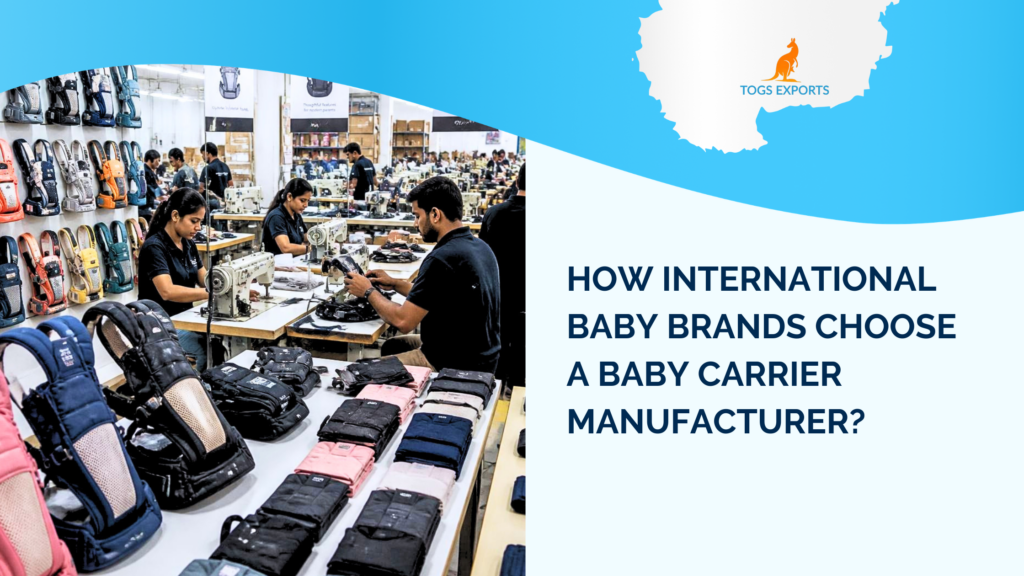
Choosing a manufacturing partner can influence how smoothly a baby carrier moves from an initial idea to a finished product. An International Baby Carrier Manufacturer needs to offer more than production capacity. Product development, sampling, materials, quality control, customization, and production consistency all contribute to the success of a baby carrier brand.
The baby carrier market continues to focus on comfort, safety, ergonomic design, and convenience. At the same time, brands entering international markets need to consider the product requirements of their target countries. For this reason, choosing the right manufacturing partner should start well before production begins.
Manufacturing Capability Beyond Production
A reliable manufacturing partner should understand the complete product journey rather than only the final stitching and assembly.
A brand may approach a factory with a finished design, technical specifications, a reference product, or simply an initial concept. The manufacturer then needs to understand the construction and translate those requirements into a practical production process.
A strong International Baby Carrier Manufacturer should support important stages such as product development, material selection, sample development, revisions, production, quality checking, packaging, and labeling.
This structured approach gives brands better visibility throughout the project and creates a clear connection between product requirements and final production.
Product Development and Sample Creation
Product development forms an important part of baby carrier manufacturing. Even when a brand has a detailed concept, the design may need practical adjustments before production.
The manufacturing team may review fabric characteristics, dimensions, support panels, strap placement, buckles, stitching, adjustment systems, and finishing requirements. These details can affect both the appearance and functionality of the final product.
Sampling then gives the brand an opportunity to evaluate the physical product. The team can review measurements, materials, construction, stitching, comfort, and overall finishing before approving production.
At Togs Exports, we work through customized sample development and refinement before moving toward production. The approved sample then becomes an important reference for maintaining consistency.
Market-Specific Product Considerations
International brands should consider their target market during product development rather than after manufacturing.
Different markets can have different requirements related to safety, testing, labeling, documentation, and product information. For example, soft infant and toddler carriers sold in the United States fall under applicable federal requirements that incorporate ASTM F2236. The standard covers areas such as performance requirements, test methods, and marking.
Therefore, brands should identify the requirements that apply to their particular product and market before production. Manufacturers can then consider those requirements during product development and sampling.
This becomes especially important when a brand plans to sell the same carrier across multiple international markets.
Material Selection and Product Performance
Material selection can significantly influence a carrier’s performance. Fabric weight, flexibility, strength, texture, breathability, and durability all contribute to the final product.
A structured buckle carrier may require different material characteristics from a wrap carrier or ring sling. Similarly, a carrier intended for warmer climates may require greater attention to lightweight and breathable construction.
At Togs Exports, material selection forms part of the product-development process. We consider the intended carrier design and manufacturing requirements when working with brands to develop the product.
Quality Control and Production Consistency
Sample approval marks an important stage, but consistent production requires the same attention to detail throughout manufacturing.
Clear specifications help production teams maintain consistent measurements, materials, stitching, components, and finishing. Quality checks can then identify variations during different stages of production.
At Togs Exports, our manufacturing workflow covers cutting, stitching, assembly, quality checking, finishing, packaging, and labeling. The approved sample and agreed specifications guide the production team throughout the process.
This approach helps brands maintain consistency when they continue production across multiple orders.
OEM, ODM and Private Label Manufacturing
International brands can have very different manufacturing requirements.
An OEM project may begin with a complete brand design and technical specification. An ODM project may require greater involvement from the manufacturer during product development. Private label projects can also involve customized products, branding, labels, and packaging.
A capable Baby Carrier OEM Manufacturer should understand these different workflows and communicate clearly about the level of support required at each stage.
Togs Exports supports OEM, ODM, and private label baby carrier production, including customized product development and sample manufacturing.
MOQ and Long-Term Production Planning
MOQ remains an important consideration for international brands, particularly when launching a new product.
However, brands should evaluate MOQ alongside sample development, customization, production capability, quality control, materials, and lead times. A manufacturing partner should understand the brand’s current requirements while also considering future production needs.
For growing brands, this can make the transition from product testing to regular production much easier.
Choosing a Manufacturing Partner for Long-Term Growth
Price can influence a manufacturing decision, but it should not become the only deciding factor.
Brands should evaluate the complete manufacturing system, including communication, product development, sampling, quality control, production consistency, customization, packaging, and export experience.
A manufacturer that understands the product from development through final production can help reduce unnecessary changes and improve communication throughout the project.
For international baby brands, this process-driven approach creates a stronger foundation for developing and maintaining a reliable baby carrier product line.
Choose an International Baby Carrier Manufacturer
Togs Exports operates as a direct baby carrier manufacturing unit, supporting international brands through OEM, ODM, private label production, customized sampling, and product development.
Our manufacturing workflow covers product discussions, sample development, stitching, quality checking, finishing, packaging, and labeling. We focus on understanding each brand’s requirements and developing the production process around the approved product specifications.
For brands looking for a manufacturing partner, the right decision starts with understanding the factory’s process, capabilities, quality approach, and ability to maintain consistency throughout production.
Phone: +91 99447 50075
Website: www.togsexports.com
Frequently Asked Questions (FAQs):
1. How do I choose a baby carrier manufacturer?
Look at product development capability, sample support, quality control, customization, MOQ, production consistency, and experience with your target market.
2. What should I ask a baby carrier manufacturer before placing an order?
Discuss MOQ, sample development, materials, testing, production timelines, quality inspection, customization, packaging, labeling, and export experience.
3. What is the MOQ for baby carrier manufacturing?
MOQ depends on the product design, materials, customization, and manufacturer’s production setup. Brands should discuss MOQ during the initial development stage.
4. How long does baby carrier manufacturing take?
The timeline depends on product development, sample approval, material availability, revisions, and production requirements.
5. Can baby carriers be manufactured for international markets?
Yes. Manufacturers can develop products for international brands while considering the specifications, testing, labeling, and documentation requirements applicable to the intended markets.