
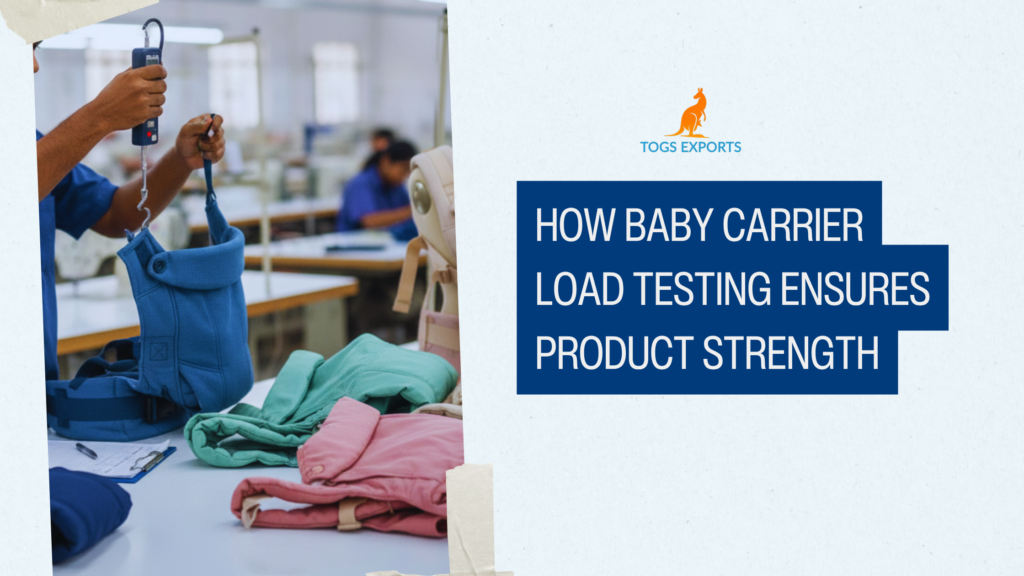
A baby carrier must perform under real pressure, not just in appearance. Parents rely on it to carry weight safely during daily movement. This makes strength a critical factor in product performance. Retailers who understand this look beyond design and focus on how products are tested. The Baby Carrier Load Testing stage plays a key role in ensuring that every carrier can handle real usage conditions.
Manufacturing alone does not guarantee reliability. Testing confirms whether the product meets required strength standards. This is where load testing becomes an essential part of the process.
How Load Bearing Carrier Testing Evaluates Real Conditions
A carrier must support both static weight and movement. Load Bearing Carrier Testing evaluates how the product performs under these conditions. Manufacturers apply controlled weight to simulate real life usage.
During Load Bearing Carrier Testing, the focus stays on stress points such as stitching, straps, and panels. These areas carry most of the load. If any weakness exists, it becomes visible during this stage.
At the same time, the Weight Capacity Testing Process ensures that the carrier maintains its structure under continuous pressure. This helps confirm long term durability.
Why Weight Capacity Testing Process Is Critical
Every baby carrier must meet a defined weight limit. The Weight Capacity Testing Process verifies that the product can safely support this load without failure.
Manufacturers apply repeated testing cycles to check how the carrier behaves over time. This includes holding weight for extended periods and simulating repeated use. The Weight Capacity Testing Process ensures that the carrier does not lose strength under normal conditions.
In parallel, Carrier Strength Validation confirms that the product maintains its performance after testing. This ensures that the carrier remains reliable even after prolonged use.
The Role of Carrier Strength Validation in Manufacturing
Testing alone is not enough. Manufacturers must confirm that the product consistently meets strength requirements. Carrier Strength Validation ensures that every tested carrier meets defined performance standards.
This process involves reviewing test results and verifying that all components perform as expected. During Carrier Strength Validation, manufacturers check stitching integrity, strap durability, and overall structure.
Combined with Load Bearing Carrier Testing, this stage ensures that the product is ready for real world use. It also helps maintain consistency across production batches.
How Baby Carrier Load Testing Supports Product Reliability
Retailers need products that perform consistently across every shipment. The Baby Carrier Load Testing process helps achieve this by setting clear performance standards.
Manufacturers use controlled testing methods to ensure that each carrier meets the same strength requirements. This reduces variation and improves product reliability. Through consistent Load Bearing Carrier Testing, manufacturers can identify and correct issues before products reach the market.
At the same time, the Weight Capacity Testing Process and Carrier Strength Validation work together to maintain quality across all units. This ensures that customers receive a dependable product every time.
Why Strength Testing Matters for Retailers
Retailers who focus on product strength reduce the risk of returns and customer complaints. A well tested carrier builds trust and supports long term brand value.
At Togs Exports, we treat testing as an essential part of manufacturing. Our approach combines detailed Baby Carrier Load Testing, controlled Load Bearing Carrier Testing, and a structured Weight Capacity Testing Process. We also ensure thorough Carrier Strength Validation to maintain consistent quality.
If you are looking to source reliable products backed by strong testing systems, we would be glad to discuss your requirements.
Phone: +91 99447 50075
Website: www.togsexports.com
Frequently Asked Questions (FAQs)
What is baby carrier load testing?
It is a process where carriers are tested under weight to ensure they can handle real usage safely.
Why is load testing important?
It helps identify weaknesses and ensures the product meets safety and durability standards.
What is the weight capacity testing process?
It checks whether the carrier can support the specified weight over time without failure.
How is strength validated in baby carriers?
Through testing results that confirm stitching, straps, and structure perform reliably.
Does load testing affect production quality?
Yes, it helps maintain consistent standards across all manufactured products.