
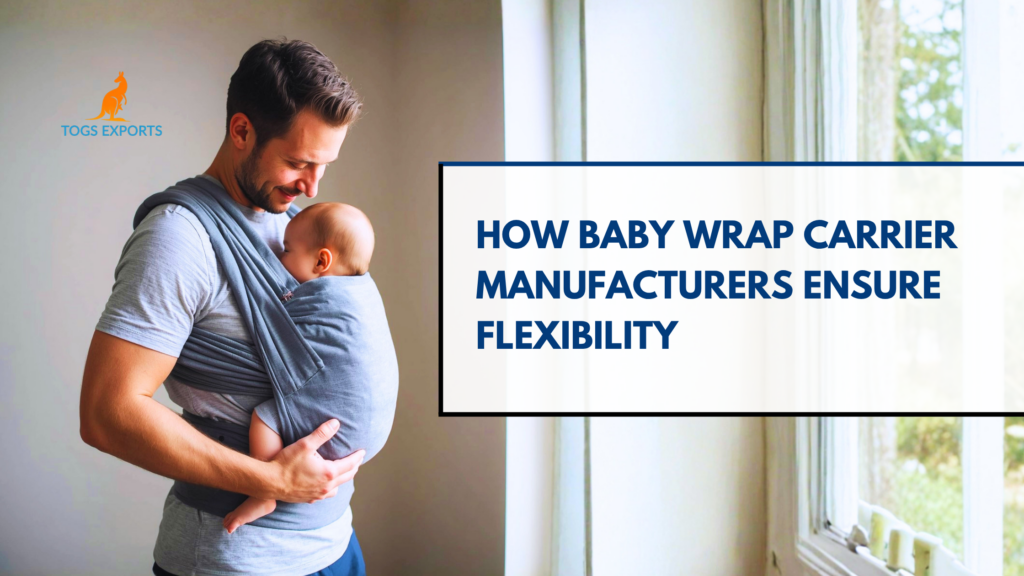
Flexibility defines the experience of a baby wrap carrier. Parents expect a carrier that adapts to their body while supporting the baby securely. This balance does not happen by chance. It comes from how the product is developed and manufactured. Retailers who understand this difference often work closely with a Baby Wrap Carrier Manufacturer to ensure that flexibility remains consistent across every unit.
Wrap carriers may look simple, yet they rely heavily on fabric behavior and construction methods. The way the material stretches, holds weight, and returns to shape determines how the carrier performs in daily use.
How Stretch Wrap Carrier Production Supports Natural Movement
Stretch is a key feature in wrap carriers. It allows the fabric to adapt to different carrying positions and body shapes. During Stretch Wrap Carrier Production, manufacturers control how much the fabric stretches and how it reacts under load.
The material must stretch enough to provide comfort, yet remain firm enough to support the baby safely. In Stretch Wrap Carrier Production, teams test elasticity and recovery to maintain this balance. Too much stretch can reduce support, while too little can affect comfort.
At the same time, Soft Fabric Carrier Production ensures that the material feels gentle against the skin. This combination of stretch and softness improves the overall carrying experience.
Why Woven Wrap Manufacturing Process Matters
Not all wrap carriers rely on stretch. Some use woven fabrics that provide flexibility through structure rather than elasticity. The Woven Wrap Manufacturing Process focuses on how threads are interlaced to create strength and adaptability.
In this process, manufacturers control weave patterns to achieve the right balance between firmness and flexibility. A well managed Woven Wrap Manufacturing Process allows the fabric to mold around the baby while maintaining support.
Meanwhile, Stretch Wrap Carrier Production and woven techniques often complement each other. Together, they provide options that suit different user preferences while maintaining consistent performance.
The Role of Soft Fabric Carrier Production in Comfort
Flexibility alone is not enough. The fabric must also feel comfortable during extended use. This is where Soft Fabric Carrier Production becomes important.
Manufacturers select materials that combine smooth texture with durability. During Soft Fabric Carrier Production, finishing techniques ensure that the fabric remains breathable and gentle. This reduces irritation and improves usability.
At the same time, Woven Wrap Manufacturing Process ensures that softness does not compromise strength. Combined with Stretch Wrap Carrier Production, it creates a carrier that adapts naturally without losing support.
Why Flexibility Depends on Manufacturing Consistency
Retailers often notice differences in flexibility between products from different suppliers. These variations usually come from inconsistent manufacturing practices.
Working with a reliable Baby Wrap Carrier Manufacturer ensures that flexibility remains consistent across every batch. Controlled Stretch Wrap Carrier Production, precise Woven Wrap Manufacturing Process, and stable Soft Fabric Carrier Production all contribute to this consistency.
At Togs Exports, we focus on maintaining this balance in every stage of production. Our manufacturing approach ensures that each wrap carrier delivers the same level of flexibility, comfort, and support.
If you are looking to expand your product range with wrap carriers and want to work with a dependable Baby Wrap Carrier Manufacturer, we would be glad to discuss your requirements.
Phone: +91 99447 50075
Website: www.togsexports.com
Frequently Asked Questions (FAQs):
What makes baby wrap carriers flexible?
Flexibility comes from fabric stretch, weave structure, and how the material adapts to movement.
Are wrap carriers comfortable for long use?
Yes, when manufactured properly, they provide both flexibility and support for extended use.
What fabrics are used in wrap carriers?
Stretch and woven fabrics are commonly used, depending on the desired flexibility and support.
Can wrap carriers be customized?
Yes, fabric type, size, and branding can be customized based on requirements.
How is quality maintained in wrap carrier production?
Through controlled manufacturing processes and consistent material selection.